Routes
Mainland China, Hong Kong, and Macau: Planning a Cross-Border Route
Hong Kong and Macau can fit well with South China, but border crossings change payment, SIM, immigration, and timing assumptions.
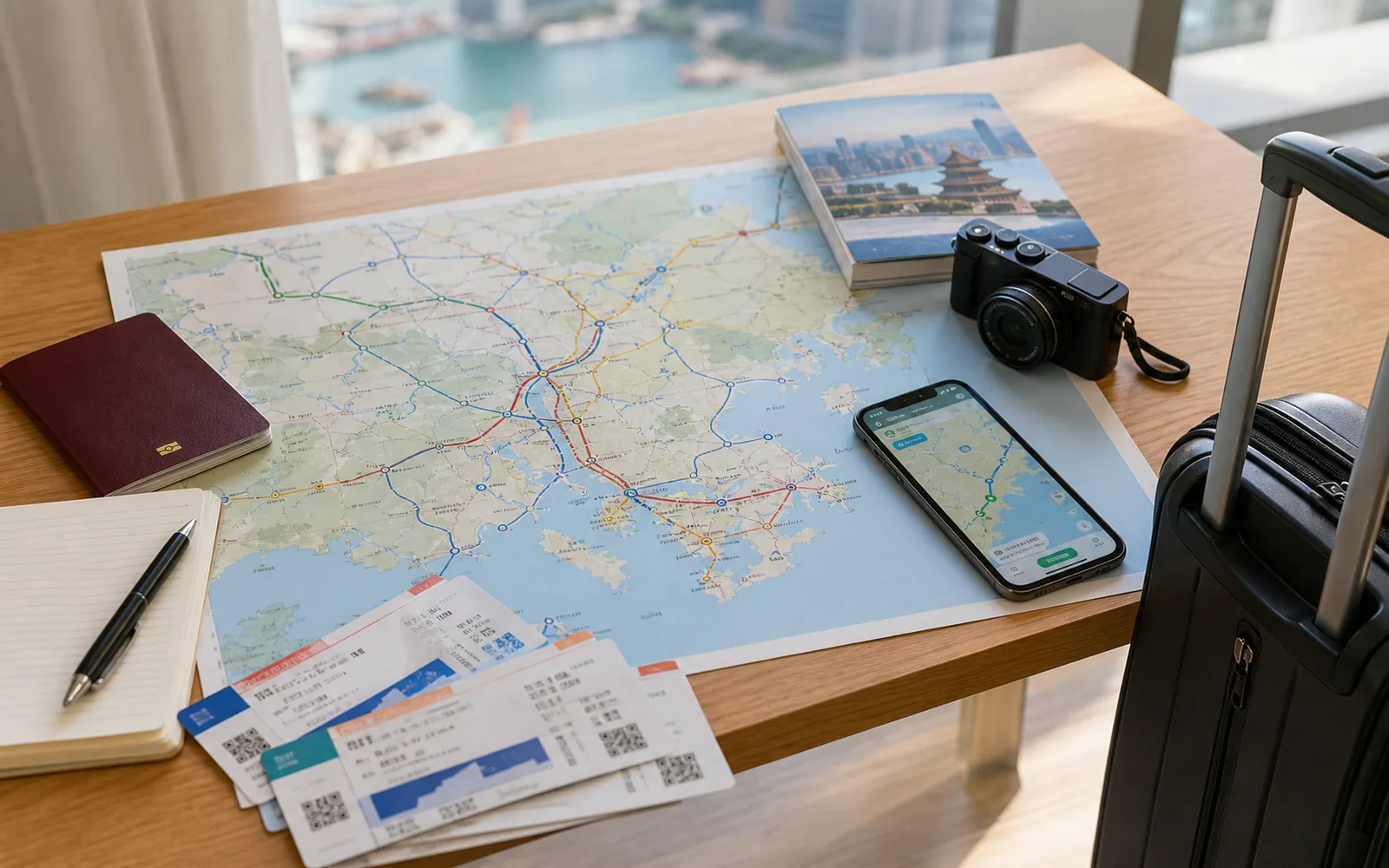
Quick answer
Treat each border crossing as a real transfer day with documents, data, payment, and luggage checks.
A border is a system change
Mainland China, Hong Kong, and Macau can feel close on the map, but they involve different immigration rules, payment habits, transport systems, phone behavior, and currency assumptions. A smooth route recognizes that each crossing is a system change, not just a metro ride.
The more casual the crossing looks, the easier it is to under-plan.
Shenzhen is the practical bridge
Shenzhen is often the most practical mainland base for Hong Kong crossings, especially for business, technology, or border logistics. Guangzhou can also connect well by rail, while Macau may fit better with Zhuhai or a Pearl River Delta route.
Choose the crossing point based on the rest of your route.
Documents and eligibility come first
Visa-free, transit, and regular visa rules can change, and eligibility depends on passport, route, and purpose. Always check official current rules before building a cross-border itinerary. Do not assume a rule that works for one traveler works for another.
The itinerary should follow the documents, not the other way around.
Payment and data reset
A payment method, SIM, or roaming plan that works in one jurisdiction may behave differently in another. Prepare offline addresses, currency backup, and a way to communicate after crossing.
Cross-border days need extra redundancy.
Practical checklist
- Check current entry rules from official sources.
- Plan border day with buffer time.
- Prepare payment and data backups.
- Keep luggage light if using busy crossings.
- Save addresses for both sides of the border.