Payments
China Payment Risk Map: Where Foreign Visitors Get Stuck
Payment problems in China are not random. They cluster around taxis, small merchants, deposits, identity checks, bank card limits, and weak data connections.
Quick answer
A resilient payment setup has a primary QR app, a secondary method, a small cash reserve, and a habit of testing before pressure.
The risk is situational
A payment method that works at a convenience store may fail at a small restaurant, a hotel deposit desk, a taxi, a museum ticket platform, or a vending machine. The problem is rarely one single app. It is the combination of merchant setup, network, identity verification, card issuer risk rules, and the amount being charged.
This is why visitors should think in payment situations rather than payment brands.
First test small, then test important
Before relying on mobile payment for a long day, make small purchases in low-pressure places. Then test the scenario that matters most for your trip: taxi, metro, rail ticket, hotel deposit, restaurant, or business invoice. A successful coffee purchase is useful, but it does not prove every payment path works.
Testing early turns a crisis into a checklist.
Cash is not old-fashioned backup
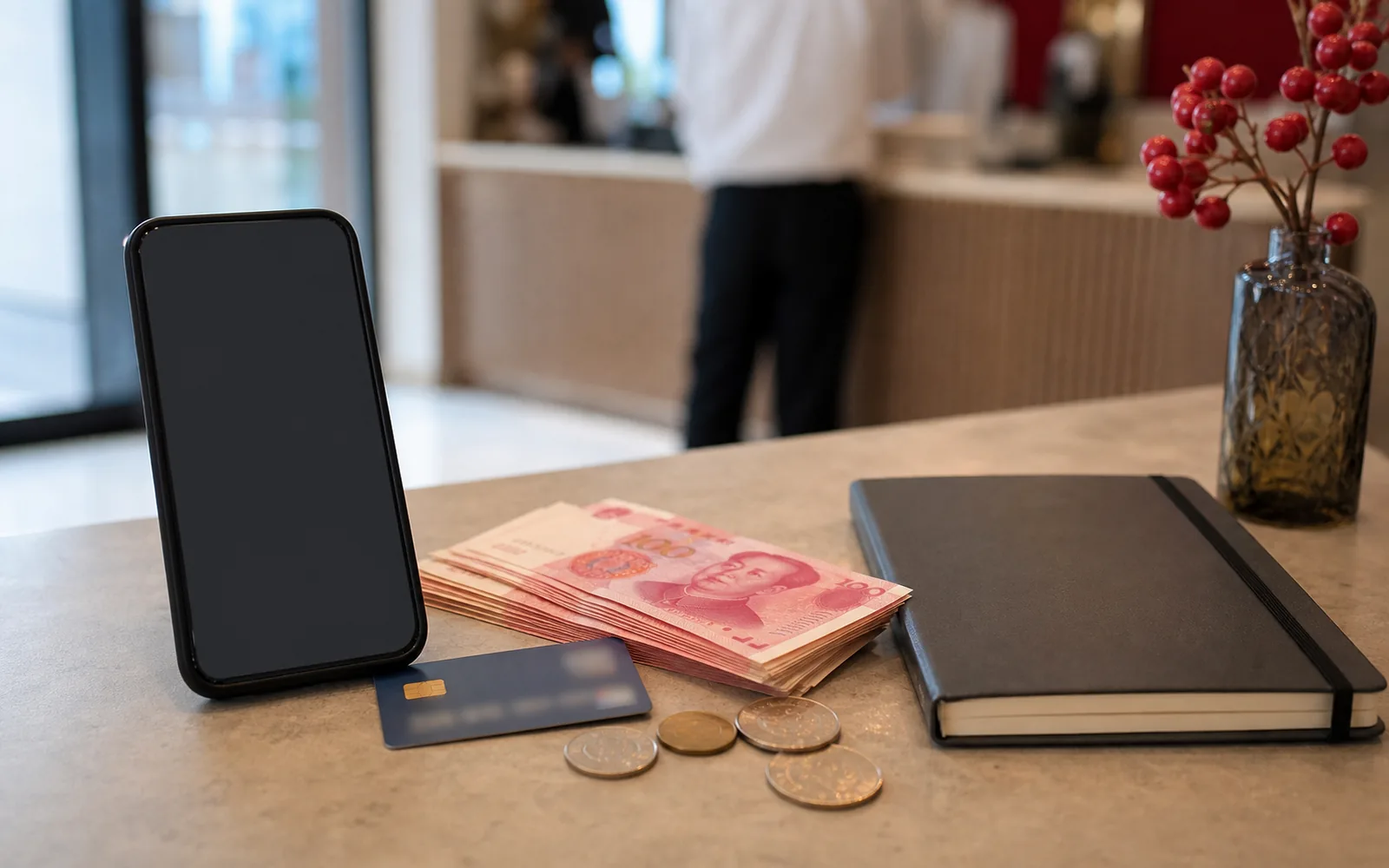
China is mobile-payment-first, but RMB cash still matters as a last-resort tool. It can solve small transport, food, and emergency problems when app verification, data, or card authorization fails. Cash should not be your only plan, but not carrying any can make small failures much larger.
Keep cash in smaller notes and separate it from your passport.
Receipts and screenshots matter
For hotels, refunds, deposits, taxi disputes, and business expenses, keep screenshots and receipts. A clean payment record can solve problems faster than explaining from memory. If you pay through an app, screenshot the merchant name, amount, and time when the situation is important.
Good records are part of the payment system.
Practical checklist
- Test payment at a convenience store and restaurant.
- Keep RMB cash for small emergencies.
- Screenshot important payments.
- Know your card issuer's travel settings.
- Prepare a second app or method before arrival.