Food
How to Build Food Confidence in China
China food travel becomes easier when you learn ordering patterns, spice signals, dietary phrases, meal timing, and backup options.
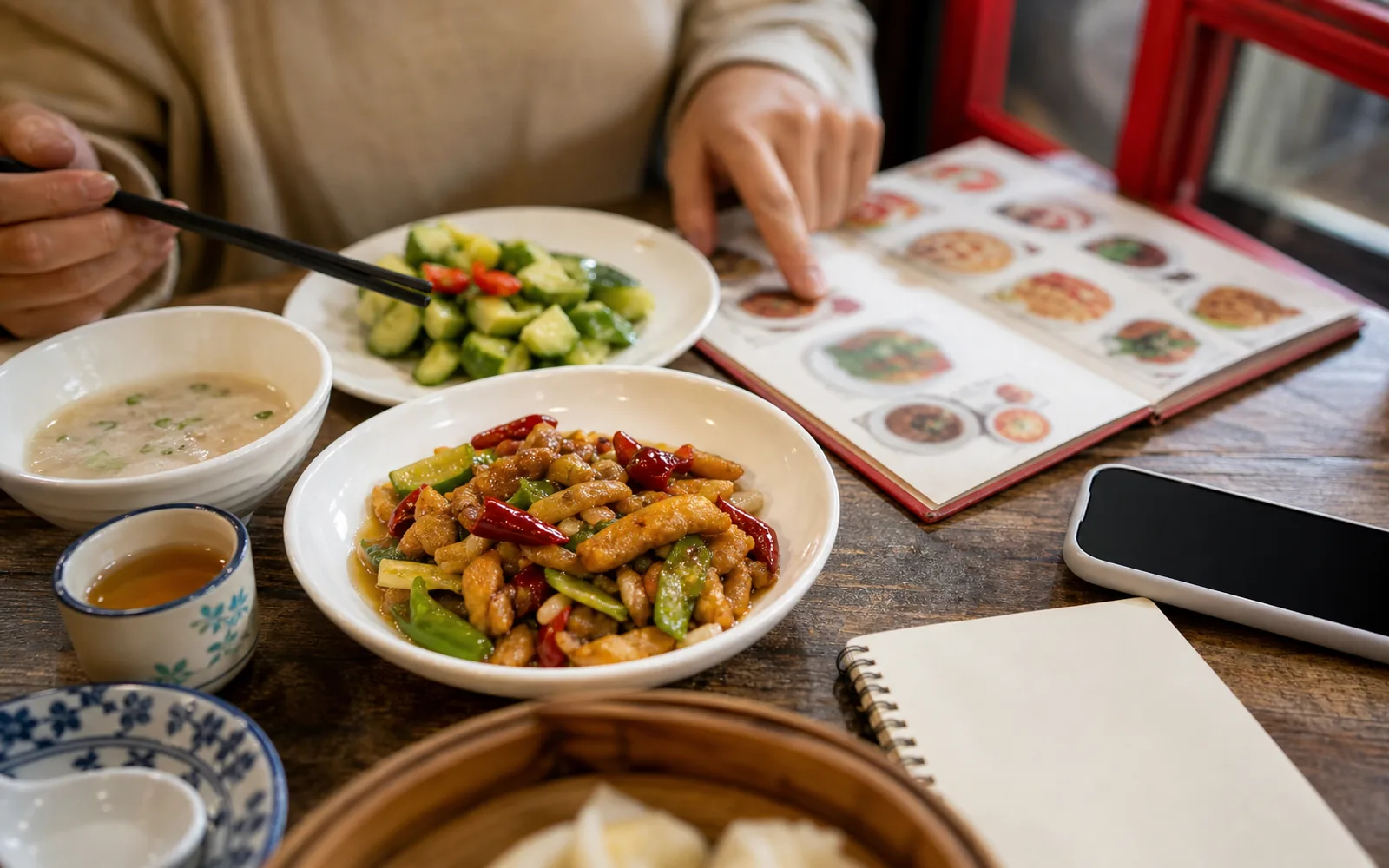
Quick answer
Start with predictable meals, learn a few ordering patterns, and keep dietary requirements written in Chinese.
Food anxiety is usually ordering anxiety
Many visitors are excited about Chinese food but nervous about menus, spice, allergies, or social rules. The first step is not becoming an expert. It is learning how to order a simple meal, identify a safe backup, and explain one important restriction clearly.
Confidence grows through repeatable patterns.
Use restaurant types strategically
Mall restaurants, hotel breakfast, noodle shops, dumpling places, hotpot chains, convenience stores, and food courts all solve different problems. A food court may be easier on arrival day. A local restaurant may be better when you have translation time. A hotpot meal may be great socially but harder for allergies.
Choose the restaurant type for the situation.
Dietary needs need written phrases
Vegetarian, halal, gluten-free, peanut allergy, shellfish allergy, and spice tolerance should be written in Chinese and shown clearly. Do not rely on a long translated explanation during a busy meal. Keep phrases short and direct.
When the risk is medical or religious, preparation matters.
Ordering is social, not just transactional
Shared dishes, hosting, paying, seating, and toasts can all feel unfamiliar. You do not need to master everything, but noticing the social structure helps. In business or family meals, wait, observe, and ask gently if unsure.
Food in China is often part of relationship-building.
Practical checklist
- Save dietary phrases in Chinese.
- Identify one simple food backup near hotel.
- Learn spice and allergy words.
- Use mall restaurants for low-friction meals.
- Keep payment backup for QR ordering.