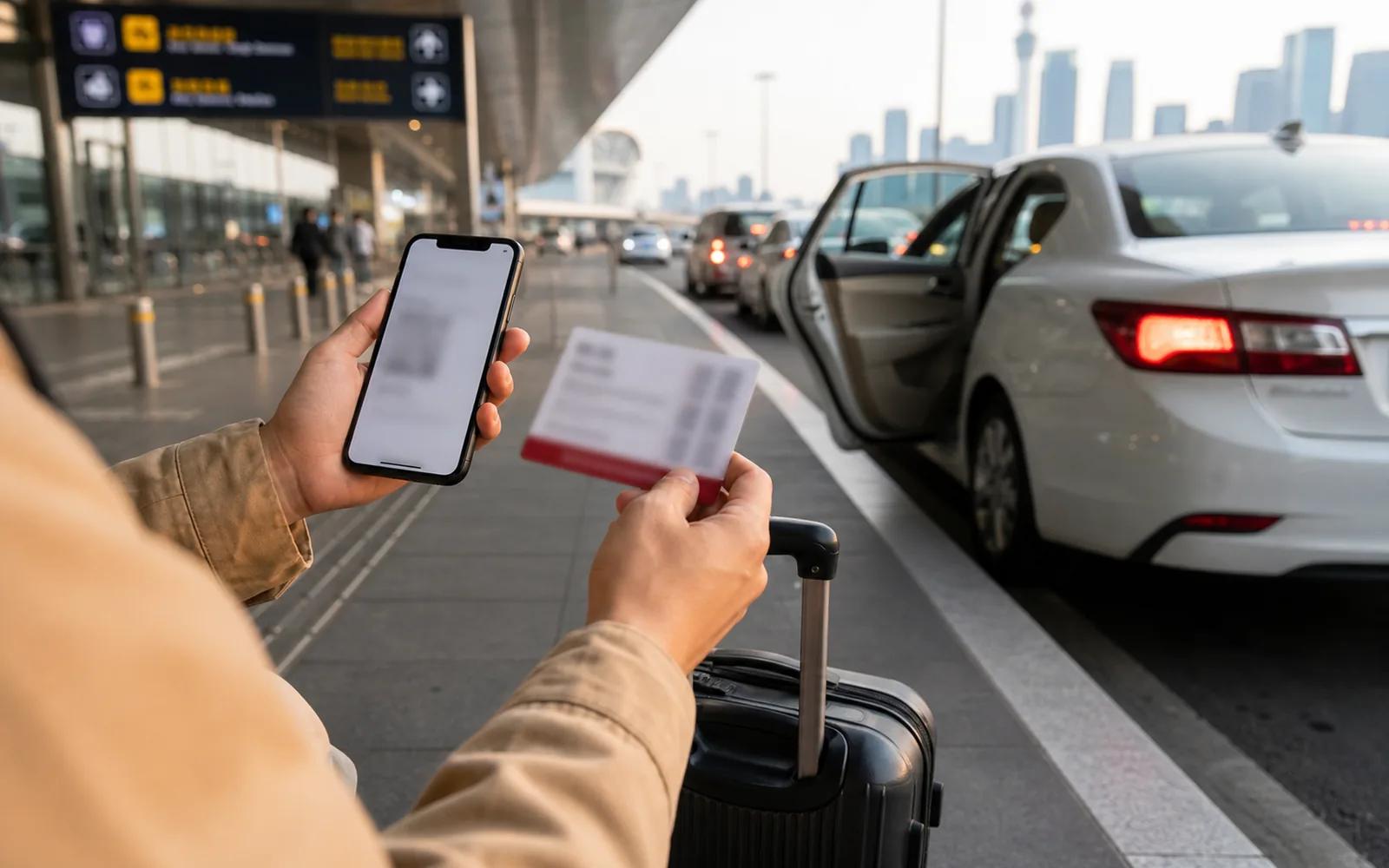
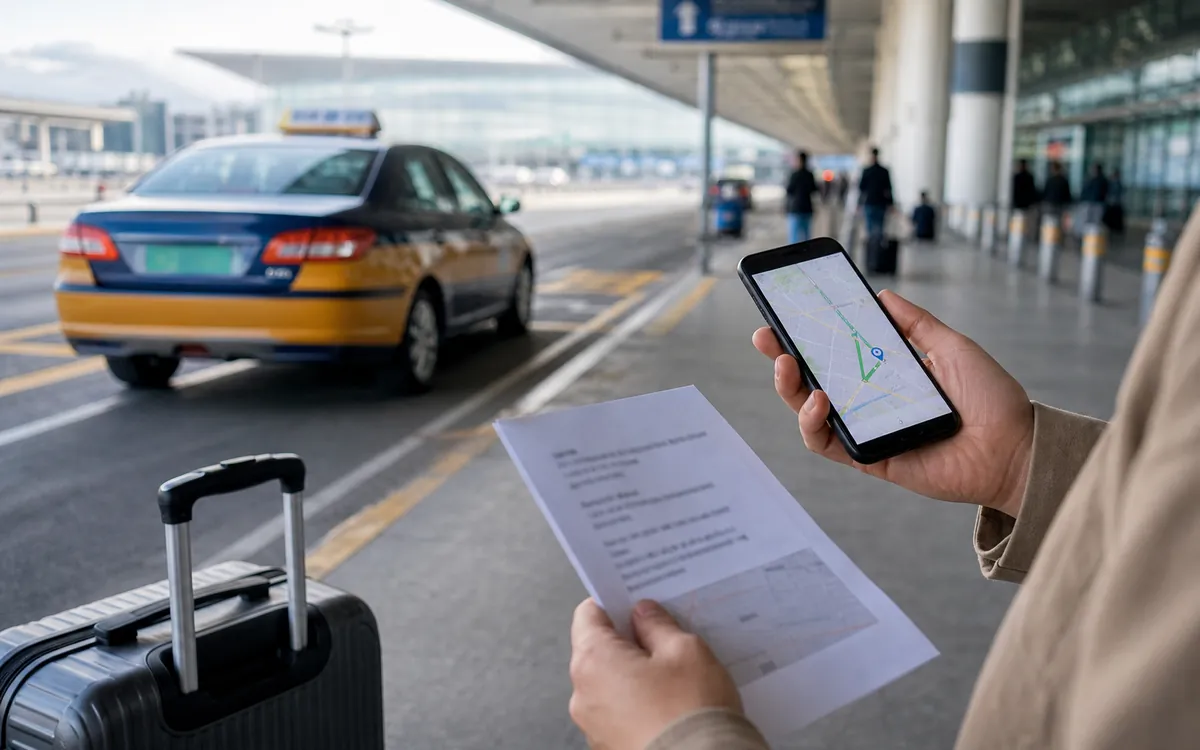
Before leaving arrivals, get data working, save your hotel name and address in Chinese, choose one primary route, keep a backup payment method ready, and use the official taxi queue or rail signs instead of accepting random driver offers inside the terminal.
Decision layer
The airport transfer is a systems test.
The first ride checks almost every arrival system at once: mobile data, Chinese address, payment backup, luggage practicality, time of day and your ability to refuse bad transport offers while tired.
Confirm mobile data, maps, translation and the hotel address in Chinese. Do this before you are in a taxi queue or metro concourse.
Metro can be easy with light luggage and daytime arrivals. Official taxi or ride-hailing can be better when late, tired or carrying bags.
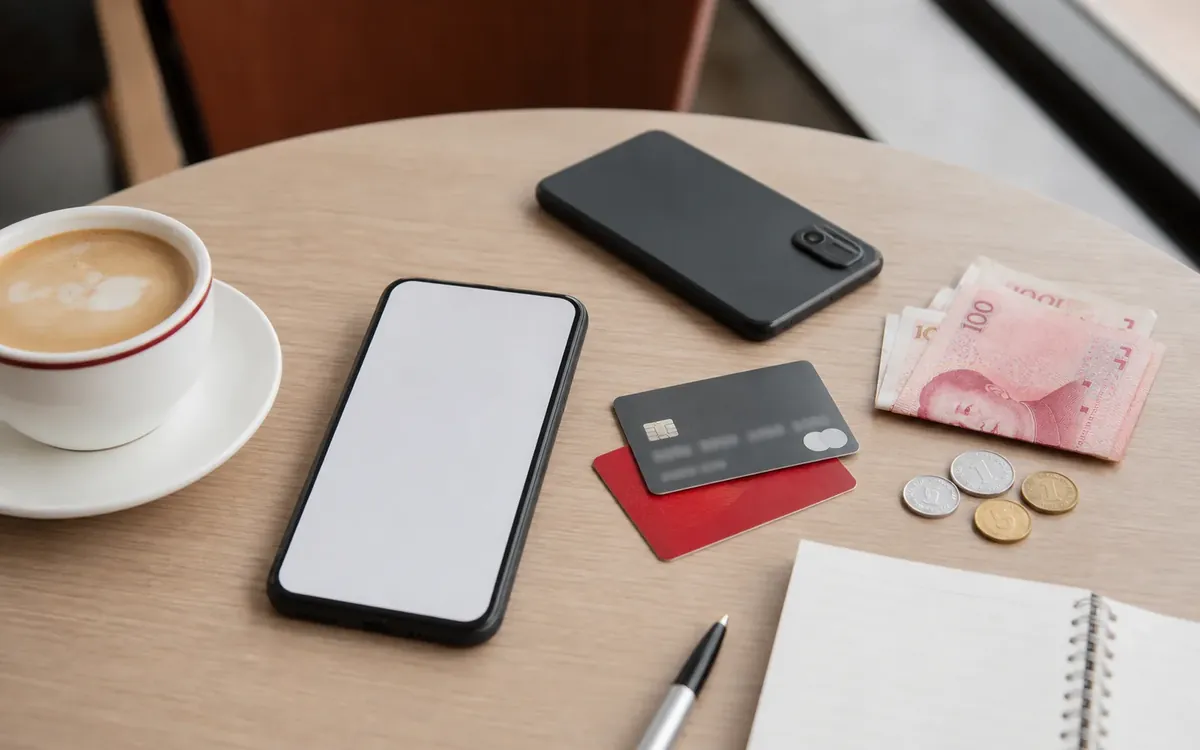
Have cash or a second payment method ready for the first ride and the hotel deposit. Do not make the first hour depend on one QR scan.
Use taxi or ride-hailing when
- You arrive late at night
- You have heavy luggage
- The hotel is far from metro exits
Use metro when
- You arrive early enough
- The route has few transfers
- You can handle stairs and walking
Practical caution: avoid random driver offers inside the terminal. If anything feels unclear, return to official signs, staffed counters or the formal taxi queue.
Airport to hotel: what changes the decision
At the airport
- Finish immigration, SIM/eSIM, payment and address checks first.
- Avoid complex transfers after a long-haul arrival.
- Keep your hotel name and address in Chinese.
To the hotel
- Pick metro, taxi or ride-hailing based on luggage and time.
- Prepare screenshots for drivers and hotel staff.
- Keep cash or a second payment method for the first ride.
Hotel and arrival decision guide
The best hotel choice is usually the one that makes check-in, transport and first-day recovery easier.

Safer stay
- Confirm foreign passport check-in.
- Save the Chinese name and address.
- Choose location by station access, not only price.
Risky stay
- Book an unverified property late at night.
- Arrive without the Chinese address.
- Ignore deposits, payment and registration rules.
 Before the moment
Mark the one choice From airport to hotel needs to settle.
Before the moment
Mark the one choice From airport to hotel needs to settle.
Turn the page into a short checklist: what to show, what to save, and what to do if the first answer does not work.
 After the first try
Write down what changed on the ground.
After the first try
Write down what changed on the ground.
China travel details shift by city, venue and staff interpretation, so keep screenshots and names beside the routes, transfer buffers and station details notes.
Stations, exits and backup routes
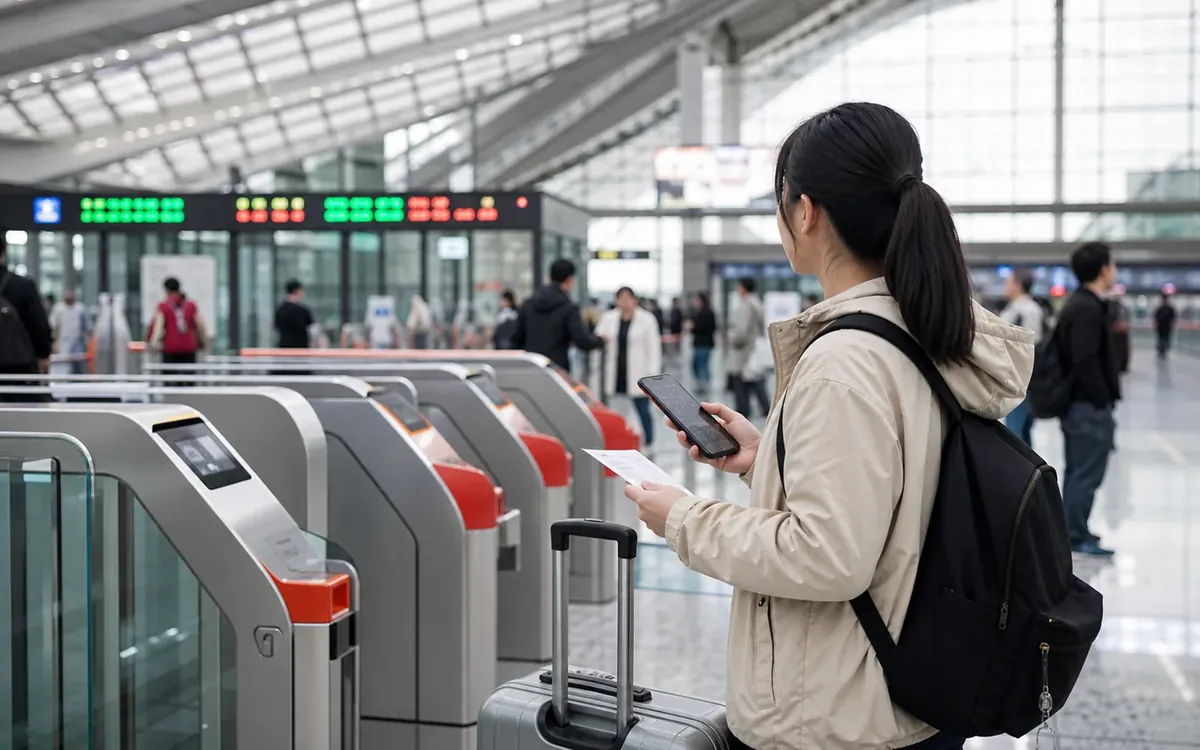
Check the Chinese station name, terminal, luggage route, security check and the fallback ride before a timed connection.
 Entry
Entry rules before booking
Entry
Entry rules before booking
 Transport
Rail and city transfers
Transport
Rail and city transfers
 Apps
Phone, maps and translation
Apps
Phone, maps and translation
How to use From airport to hotel
This page is designed for the first hour after landing, when tired visitors make expensive mistakes. It favors official transport, Chinese addresses, and payment backups.
First-arrival rule: choose the calm route, not the clever route. After a long flight, with luggage and a new payment setup, a slightly slower official taxi or direct airport rail route is often better than a complicated transfer.
Before you leave the airport
The first mistake is rushing. Spend ten minutes solving the basic systems before you walk toward taxis, metro, or ride-hailing pickup. A calm setup prevents a messy first hour.
- Turn on roaming, eSIM, SIM, or airport Wi-Fi.
- Save your hotel name, address, and phone number in Chinese.
- Take screenshots of the hotel map pin, booking confirmation, and route.
- Confirm that you have one working payment route plus cash or card backup.
- Use restroom, water, and a simple snack before a long transfer.
- Check your terminal, arrival floor, and transport signs before following a crowd.
Choose your route
Official taxi
Best when tired, carrying luggage, arriving late, traveling with family, or going to an address not near rail.
Metro or airport rail
Best with light luggage, daytime arrival, working phone data, and a hotel near a station.
Ride-hailing
Useful when your app and payment work, but airport pickup zones can be confusing on the first trip.
Hotel pickup
Good for late arrival, business travel, family trips, remote hotels, or first-time visitors who want less friction.
Airport bus
Useful in some cities, but check destination stops, luggage, service hours, and final taxi distance.
Backup plan
If everything feels messy, use official taxi or ask airport information staff where to find the correct queue.
Official taxi
At major airports, follow signs for the official taxi queue. Ignore unofficial drivers who approach you in arrivals, quote a price, or ask you to follow them away from the queue. Show your hotel address in Chinese and keep the map open.
- Use the marked taxi queue, not a random offer inside the terminal.
- Show hotel name, address, and phone number in Chinese.
- Keep the route visible, but do not argue over every turn in a city you do not know.
- Ask for a receipt if you need reimbursement or might need to trace a lost item.
- Keep small RMB cash or a working mobile payment method ready.
Metro and airport rail
Metro and airport rail can be clean, cheap, and predictable. The tradeoff is luggage, station transfers, stairs, crowds, and walking distance at the destination. A hotel "near the metro" may still be awkward with bags at night or in rain.
- Check service hours before choosing rail for a late arrival.
- Check the number of transfers and whether the final station has elevators or escalators.
- Use the Chinese station name, not only the English name, when checking maps.
- For families, large luggage, rain, heat, or late arrival, taxi may be worth the extra cost.
- Keep your passport and ticket or payment method accessible if required by the system.
Ride-hailing from the airport
Ride-hailing can work well after your app, phone number, map, and payment are ready. The hard part for first-time arrivals is the pickup zone. Airports often have specific floors, doors, parking areas, or app pickup points.
- Do not request the car until you know the pickup zone.
- Check whether the app shows terminal, floor, gate, or parking area instructions.
- Expect the driver to call or message if they cannot find you.
- Use translation for short messages such as "I am at Door 5, arrival floor."
- If pickup becomes confusing, cancel safely and use the official taxi queue.
Late-night arrivals
Late-night arrival changes the decision. Metro or airport rail may have stopped, staffing may be thinner, and payment problems feel worse when you are tired.
Payment on the first ride
Do not make your first major payment experiment inside a taxi if you can avoid it. If payment fails, switch methods quickly instead of repeating the same scan.
- Carry enough RMB cash for a taxi if possible.
- Keep Alipay or WeChat Pay ready if already tested.
- Keep a foreign card for hotels, not as your only taxi plan.
- If the taxi payment fails, ask whether cash is accepted or go to the hotel front desk for help.
- After check-in, test payment with a small purchase nearby.
Hotel address in Chinese
A hotel brand name in English may not be enough. Many cities have multiple branches, similar names, new districts, side entrances, and large compounds. Save the full Chinese address.
- Hotel Chinese name.
- Full Chinese street address.
- Hotel phone number.
- Map pin screenshot.
- Booking confirmation with your passport name.
- Nearby landmark or district if the hotel provides one.
Hotel check-in
Hotels in China normally need your passport for check-in. Some may also ask for a local phone number, booking confirmation, deposit, or payment method. The front desk may scan or copy passport information for accommodation registration.
- Keep your passport and booking confirmation ready.
- Make sure the booking name matches your passport name closely enough for the hotel to find it.
- Ask the front desk to write your hotel address in Chinese for taxis.
- Ask where the nearest ATM, convenience store, metro station, and pharmacy are.
- Save the hotel phone number in case a driver needs directions later.
If something goes wrong
Driver cannot find hotel
Call the hotel front desk and let them speak with the driver.
Payment fails
Try another app, cash, card, or ask to resolve it at the hotel front desk.
Lost item
Receipt, app record, plate number, pickup time, and route history help.
Wrong hotel branch
Show the booking and ask the front desk to confirm the correct branch in Chinese.
No booking found
Check passport name, platform confirmation, date, hotel branch, and payment status.
Too tired to solve it
Prioritize getting to a staffed hotel desk, not winning a complicated app battle at the curb.
Special situations
- Families: choose fewer transfers, more luggage space, and a calmer route.
- Business travelers: keep taxi receipts and hotel invoices if reimbursement matters.
- Students: confirm campus arrival gate, dorm office hours, and whether late check-in is possible.
- Long-stay arrivals: ask about accommodation registration, SIM setup, banking, and nearby services after check-in.
- Travelers with mobility needs: favor direct taxi or hotel pickup unless you have confirmed elevators and route accessibility.
Next steps after check-in
- Test a small payment near the hotel.
- Save hotel address and phone offline.
- Find the nearest convenience store and ATM.
- Check tomorrow's first route before sleeping.
- Prepare emergency contacts and your passport copy.