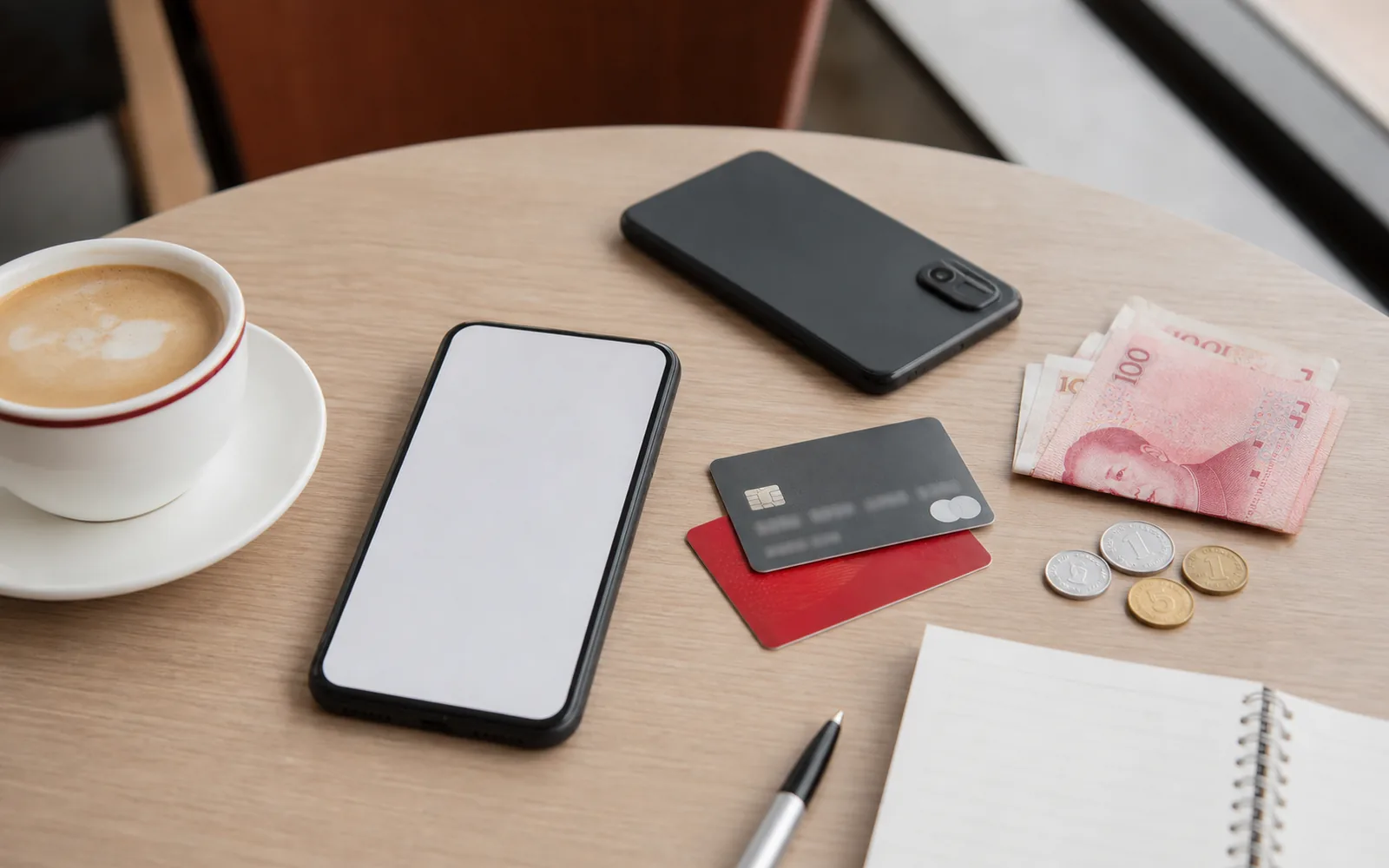

If payment fails in China, do not keep repeating the same method. Switch network, try the other QR direction, use another linked card or payment app, try eligible PayPal QR, use RMB cash, ask for bank card acceptance, or move the problem to a safer place such as your hotel.
Payment failed: what changes the decision
First fixes
- Try a smaller amount or a different QR method.
- Check network, app verification and card status.
- Ask the merchant if another payment route is available.
Fallback fixes
- Use cash, hotel help, a second wallet, or ATM cash.
- Keep screenshots of error messages if support is needed.
- Do not wait until the last train, taxi or checkout deadline.
Payment choice under pressure
Use this comparison before the first paid moment, then keep the backup active after the first successful scan.
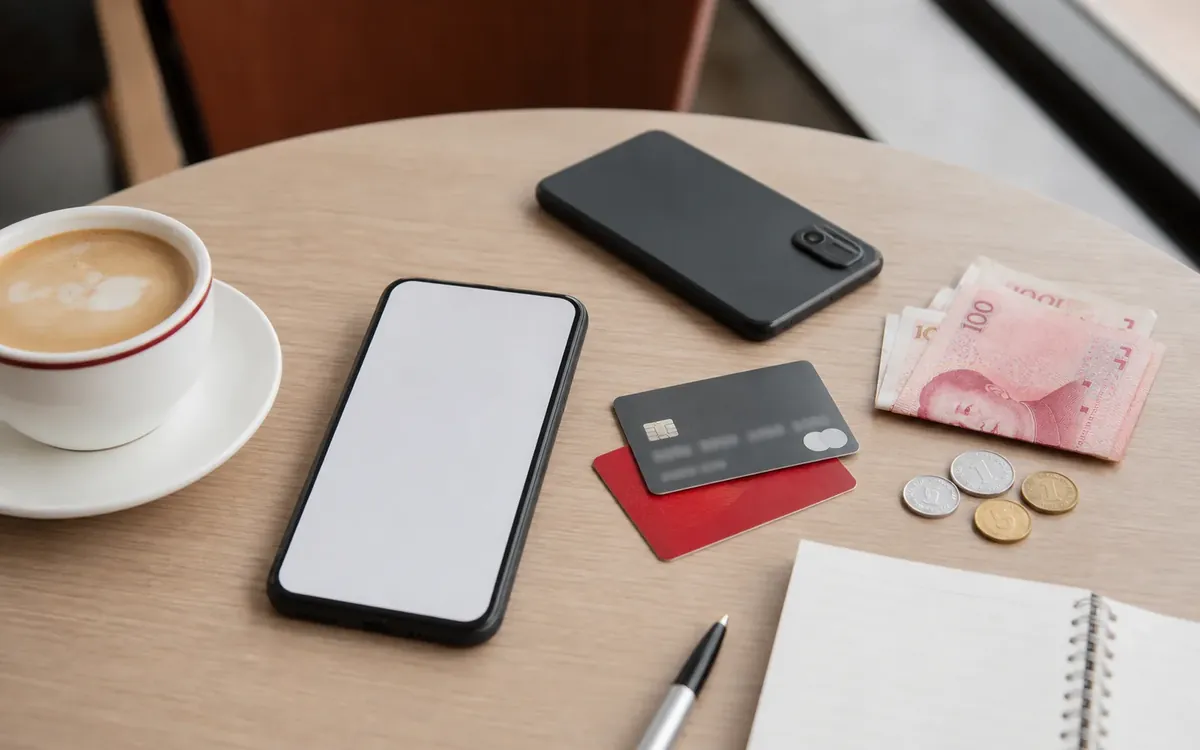
Safer setup
- Prepare one primary QR wallet.
- Keep a card, ATM or cash fallback.
- Test a small purchase before relying on it.
Risky setup
- Arrive with only one card.
- Assume every shop accepts foreign cards.
- Wait until a busy counter to test payments.
 Before the moment
Mark the one choice Payment failed in China needs to settle.
Before the moment
Mark the one choice Payment failed in China needs to settle.
Turn the page into a short checklist: what to show, what to save, and what to do if the first answer does not work.
 After the first try
Write down what changed on the ground.
After the first try
Write down what changed on the ground.
China travel details shift by city, venue and staff interpretation, so keep screenshots and names beside the money, receipts and payment backups notes.
Wallet, card and cash fallback
Check wallet setup, card backup, ATM access, cash reserve and the receipt or screenshot you may need later.
 Entry
Entry rules before booking
Entry
Entry rules before booking
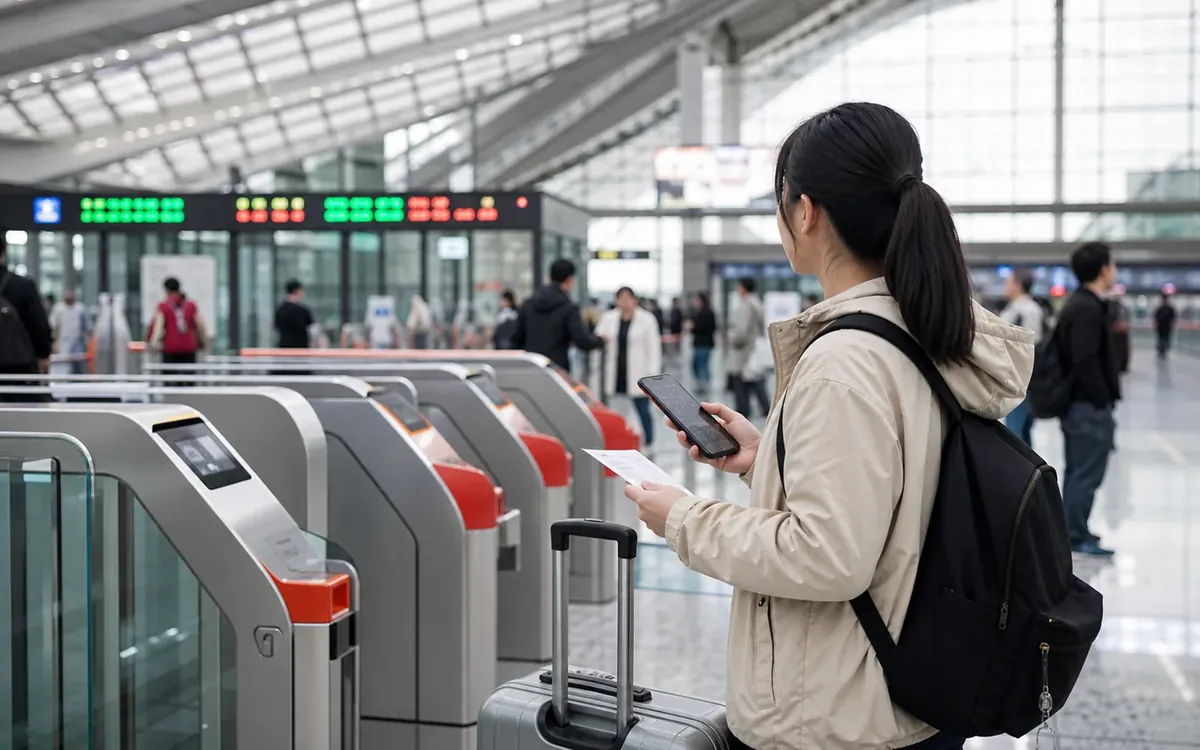 Transport
Rail and city transfers
Transport
Rail and city transfers
 Apps
Phone, maps and translation
Apps
Phone, maps and translation
Use a payment stack: official guidance for overseas visitors describes several payment layers, including mobile payments, bank cards, cash, bank accounts, and e-CNY. In practice, travelers should keep at least two working methods plus a small RMB cash reserve.
First-minute rescue flow
When you are standing at a counter, in a taxi, or at a restaurant, your goal is not to diagnose everything. Your first goal is to finish the payment or move the problem somewhere safer.
- Stay calm and do not repeatedly tap or scan ten times in a row.
- Switch between mobile data and Wi-Fi if either is available.
- Try the other QR direction: scan the merchant code, or show your payment code if the merchant can scan you.
- Try the other app: Alipay, WeChat Pay, PayPal QR if eligible, or another wallet route.
- Try another linked card inside the app.
- Ask whether cash, bank card, split payment, or a different QR code is accepted.
- If you are in a taxi or late-night situation, ask to go to your hotel so staff can help communicate.
Why payments fail
A failed payment does not always mean the merchant refuses foreigners. The cause can be technical, financial, identity-related, or merchant-specific.
QR payment problems
China QR payments can work in two directions. In some places you scan the merchant's QR code. In others, the merchant scans your payment code. A foreign-card-linked account may work with one merchant and fail with another because merchant type, app rules, transaction category, or limit checks can differ.
- Ask whether you should scan the merchant or show your own payment code.
- Check whether the QR code belongs to Alipay, Weixin Pay, UnionPay, a restaurant ordering system, or a personal account.
- Try a smaller amount if the transaction is large and the merchant can split it.
- If a restaurant ordering QR fails, ask staff whether you can order at the counter and pay another way.
- If the app shows a Chinese error, screenshot it and translate it before trying again.
Alipay or WeChat Pay fails
Alipay and WeChat Pay are the most important daily payment tools for many visitors, but setup quality matters. A linked foreign card, app identity state, phone number, and transaction type can all affect success.
App opens but payment fails
Try another linked card, smaller amount, QR direction change, or network switch.
App asks for verification
Complete the verification if safe, or switch to another payment method for the urgent transaction.
Merchant cannot help
Use cash, card, another app, or move to hotel support instead of blocking the line.
PayPal through Weixin Pay
In May 2026, Tencent announced a collaboration between TenPay Global and PayPal World that enables PayPal users to complete payments at Weixin Pay merchants in China by scanning QR codes, initially open to U.S.-based PayPal users. This can be valuable, but it should be treated as one backup layer, not your only payment plan.
- Check whether the feature is visible and working in your PayPal app before you rely on it.
- Expect rollout, eligibility, app version, account country, merchant, or transaction category to matter.
- If PayPal QR fails, switch to Alipay, WeChat Pay, card, ATM, or cash instead of repeatedly rescanning.
- Keep screenshots of failed attempts if you need to check card or wallet records later.
Foreign cards fail
Foreign cards are more reliable at international hotels, airports, larger malls, branded stores, and some tourist-facing businesses. They are less dependable for small restaurants, neighborhood shops, street taxis, and app-based services.
- Try chip, swipe, contactless, or another terminal if staff offers it.
- Check bank fraud alerts, travel notices, international transaction settings, and card limits.
- Try another network, such as Visa, Mastercard, American Express, JCB, or UnionPay, if you carry one.
- Ask whether the merchant accepts foreign cards, not only "card."
- For hotels, ask about splitting room charge, deposit, and incidentals across methods.
Cash and ATM problems
RMB cash is a useful emergency layer, but it is not perfect. Some small merchants may not have change, and some ATMs may reject foreign cards or have withdrawal limits.
- Use ATMs at major banks, airports, malls, and hotel areas when possible.
- Try another major bank ATM if the first one fails.
- Carry smaller notes for taxis, small shops, and emergency purchases.
- Do not rely on foreign currency cash for daily payment. Exchange it through legitimate channels.
- If cash is refused in a high-stakes setting, ask for a manager or another accepted payment route calmly.
Scenario fixes
Restaurant
Try another QR direction, ask for counter payment, use another app, pay cash, or ask whether staff can split the bill.
Taxi
Use cash if possible. If communication is difficult, ask to go to your hotel so staff can help resolve payment.
Hotel
Try foreign card, mobile pay, cash deposit, split payment, or ask whether a deposit can be handled separately.
Train station
Use official counters or apps, keep passport ready, and avoid last-minute payment experiments before departure.
Small shop
Use cash or another wallet. Do not expect foreign card acceptance at every neighborhood merchant.
Online booking
Try another card, another app, desktop site, official counter, hotel front desk, or trusted local help.
Prevent the next failure
- Set up at least two payment routes before departure.
- Test payment on a small purchase soon after arrival.
- Carry a small RMB cash reserve, including smaller notes.
- Tell your card issuer you are traveling if your bank supports travel notices.
- Keep passport, hotel address in Chinese, and emergency contact details offline.
- Use your hotel as first-day backup support for taxis, delivery, cash exchange directions, and translation.
When the failure is serious
Most payment failures are ordinary travel friction. Some require more care.
- If money was deducted but the merchant says unpaid, save screenshots, transaction IDs, receipt photos, merchant name, time, and amount.
- If a card is swallowed by an ATM, contact the bank branch and your card issuer immediately.
- If you suspect fraud, freeze the card or wallet and contact the issuer through official channels.
- If you cannot pay for lodging, transport, or medical care, ask your hotel, embassy or consulate, insurer, employer, school, or local host for practical help.