Payments
China Payment Risk Map: Where Foreign Visitors Get Stuck
Payment problems in China are not random. They cluster around taxis, small merchants, deposits, identity checks, bank card limits, and weak data connections.
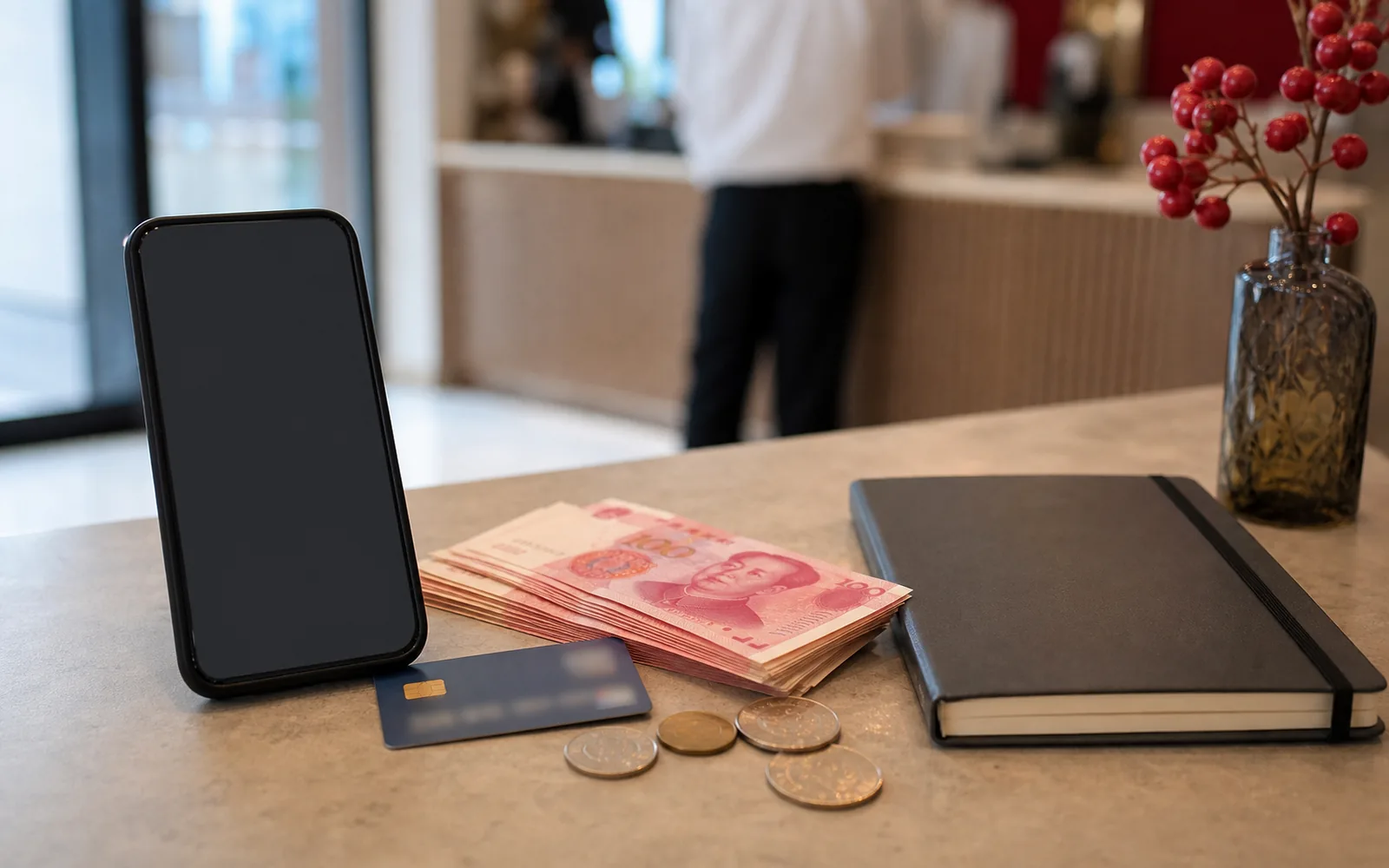
Payment risk answer
A resilient payment setup has a primary QR app, a secondary method, a small cash reserve, and a habit of testing before pressure.
The risk is situational
A payment method that works at a convenience store may fail at a small restaurant, a hotel deposit desk, a taxi, a museum ticket platform, or a vending machine. The problem is rarely one single app. It is the combination of merchant setup, network, identity verification, card issuer risk rules, and the amount being charged.
This is why visitors should think in payment situations rather than payment brands.
First test small, then test important
Before relying on mobile payment for a long day, make small purchases in low-pressure places. Then test the scenario that matters most for your trip: taxi, metro, rail ticket, hotel deposit, restaurant, or business invoice. A successful coffee purchase is useful, but it does not prove every payment path works.
Testing early turns a crisis into a checklist.
Cash is not old-fashioned backup
China is mobile-payment-first, but RMB cash still matters as a last-resort tool. It can solve small transport, food, and emergency problems when app verification, data, or card authorization fails. Cash should not be your only plan, but not carrying any can make small failures much larger.
Keep cash in smaller notes and separate it from your passport.
Receipts and screenshots matter
For hotels, refunds, deposits, taxi disputes, and business expenses, keep screenshots and receipts. A clean payment record can solve problems faster than explaining from memory. If you pay through an app, screenshot the merchant name, amount, and time when the situation is important.
Good records are part of the payment system.
Map the failure before it happens
Payment failures in China cluster around specific situations. A convenience store test is helpful, but it does not prove that a hotel deposit, taxi ride, hospital payment, museum booking or refund will work. The risk rises when identity checks, card issuer rules, weak mobile data, unfamiliar merchant terminals and time pressure arrive together. That is why a visitor can pay successfully all morning and still get stuck at the moment that matters most.
Think of each day as a payment map. Where will you need to pay while tired, moving luggage, far from the hotel, or unable to switch to another merchant? Those are the places that deserve backup. For example, a late arrival needs working ride payment or taxi cash before leaving the airport. A business day needs receipt proof. A family day needs enough payment resilience to solve food and transport quickly.
Build three layers and test two
The first layer is your normal mobile wallet. The second layer is a different card, wallet or platform route. The third layer is small RMB cash kept separately. Test the first layer in a low-pressure purchase, then test the situation that actually matters for your trip: metro, taxi, hotel, rail ticket, restaurant or attraction booking. If the important test fails, fix it before the day depends on it.
Keep payments, payment failed, bank card and cash, best payment setup, and payment checklist nearby. The best payment plan is boring because it already knows what to do when the first scan fails.
A realistic payment failure
You arrive at a small restaurant in Xi'an after a long museum day. The QR payment fails, the staff is busy, and your foreign card is not useful at the counter. If this is your first payment test, the moment becomes stressful. If you already tested the wallet and kept small cash, it becomes a minor inconvenience.
The risk map helps you decide where to test before pressure. Restaurants, taxis, hotel deposits, hospitals, stations and refund situations deserve more preparation than chain stores. Put the backup where embarrassment or fatigue would otherwise make the problem feel larger.
Rank payments by embarrassment cost
Not every failed payment has the same consequence. A failed vending machine scan is annoying; a failed hotel deposit, taxi fare, hospital counter, business dinner, or rail change can create pressure. Rank your payment situations by embarrassment cost and time cost, then test the high-cost ones before relying on them. This is more useful than simply asking whether an app "works in China."
For a first trip, the high-cost list is usually airport-to-hotel transport, hotel deposit, train ticket or station change, one real restaurant meal, and one emergency cash withdrawal. If those are covered, many smaller purchases become flexible. Keep the backup method physically and digitally separate where possible. A second card inside the same lost wallet is not a real second layer.
Payment failure checks
- Test payment at a convenience store and restaurant.
- Keep RMB cash for small emergencies.
- Screenshot important payments.
- Know your card issuer's travel settings.
- Prepare a second app or method before arrival.