Food
How to Build Food Confidence in China
China food travel becomes easier when you learn ordering patterns, spice signals, dietary phrases, meal timing, and backup options.
Food confidence answer
Start with predictable meals, learn a few ordering patterns, and keep dietary requirements written in Chinese.
Food anxiety is usually ordering anxiety
Many visitors are excited about Chinese food but nervous about menus, spice, allergies, or social rules. The first step is not becoming an expert. It is learning how to order a simple meal, identify a safe backup, and explain one important restriction clearly.
Confidence grows through repeatable patterns.
Use restaurant types strategically
Mall restaurants, hotel breakfast, noodle shops, dumpling places, hotpot chains, convenience stores, and food courts all solve different problems. A food court may be easier on arrival day. A local restaurant may be better when you have translation time. A hotpot meal may be great socially but harder for allergies.
Choose the restaurant type for the situation.
Dietary needs need written phrases
Vegetarian, halal, gluten-free, peanut allergy, shellfish allergy, and spice tolerance should be written in Chinese and shown clearly. Do not rely on a long translated explanation during a busy meal. Keep phrases short and direct.
When the risk is medical or religious, preparation matters.
Ordering is social, not just transactional
Shared dishes, hosting, paying, seating, and toasts can all feel unfamiliar. You do not need to master everything, but noticing the social structure helps. In business or family meals, wait, observe, and ask gently if unsure.
Food in China is often part of relationship-building.
Confidence comes from ordering systems
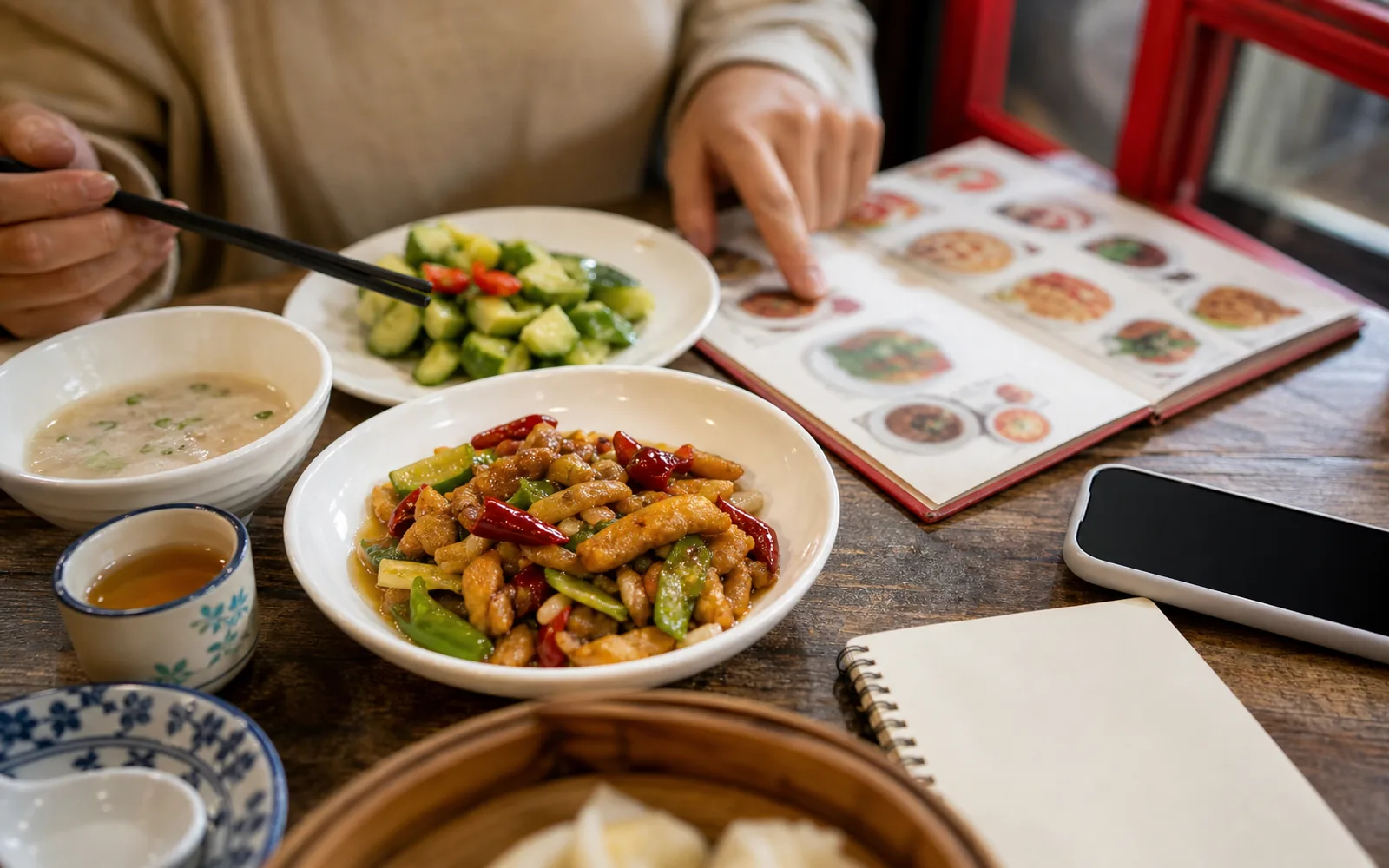
Food in China becomes easier when visitors stop trying to decode every dish and start using repeatable ordering systems. In a casual restaurant, look for photo menus, popular items, set meals, QR ordering pages, or dishes being served at nearby tables. In a mall restaurant, staff may be used to non-Chinese speakers and payment is predictable. In a small neighborhood shop, speed and simplicity matter more, so prepare a few phrases or screenshots before joining the line.
Regional differences are real. Chengdu and Chongqing can be spicy by default. Guangzhou is easier for dim sum and shared plates. Xi'an has strong wheat-based meals. Shanghai has many international fallbacks. A confident food plan leaves room for local eating while keeping one simple option near the hotel for tired nights.
When language or diet matters
If you have allergies, religious dietary limits, vegetarian needs or strong spice limits, do not depend on one translated sentence. Prepare a short card with what you cannot eat, what happens if you eat it, and whether trace amounts matter. Show it before ordering and choose restaurants where staff have time to respond. Busy street-food counters are enjoyable, but they are not always the right place for complex dietary negotiation.
For first-time visitors, use restaurant ordering, food basics, dietary needs, and dining etiquette. A good food strategy makes one daily meal adventurous and one daily meal easy. That balance keeps curiosity alive without letting hunger make decisions.
A realistic ordering moment
You enter a busy noodle shop in Xi'an. There is no English menu, the line is moving, and staff expect quick decisions. The calm version is prepared: look for the photographed house dish, point to size, pay with the QR code, and sit where others collect food. The stressful version is trying to translate every character while people wait behind you.
Confidence grows by choosing the right environment for the task. Use malls, hotel-area restaurants or photo-menu places when tired. Use smaller local shops when you have time, battery and curiosity. That pacing lets food become part of the trip instead of a daily exam.
Save before a food-focused day
Before heading into a food district, save one dietary note, one nearby fallback restaurant, and the hotel return route. If you plan to try spicy or unfamiliar food, keep the next morning gentle. Food confidence is not only about ordering bravely. It is also about knowing when to choose a calmer meal so the trip stays comfortable.
Confidence comes from ordering patterns
Food confidence in China usually improves when visitors stop treating every meal as a translation test. Build a small set of reliable ordering patterns: one noodle or rice dish, one vegetable, one protein, one breakfast option, one convenience-store fallback, and one phrase for allergies or spice level. After those are comfortable, unfamiliar restaurants become easier because you are not starting from zero each time.
The practical trick is to separate curiosity meals from recovery meals. Try regional food when you have time, battery, and patience. Use a known simple meal when you are tired, moving luggage, or preparing for an early train. Visitors who plan only exciting meals often struggle on hard travel days. Visitors who keep a basic food fallback can be more adventurous because they know how to reset.
Ordering confidence checks
- Save dietary phrases in Chinese.
- Identify one simple food backup near hotel.
- Learn spice and allergy words.
- Use mall restaurants for low-friction meals.
- Keep payment backup for QR ordering.