Health
Medical Readiness for China Travel
Medical readiness is not just insurance. It includes medicine names, allergy notes, hospital choices, payment, records, and translation.
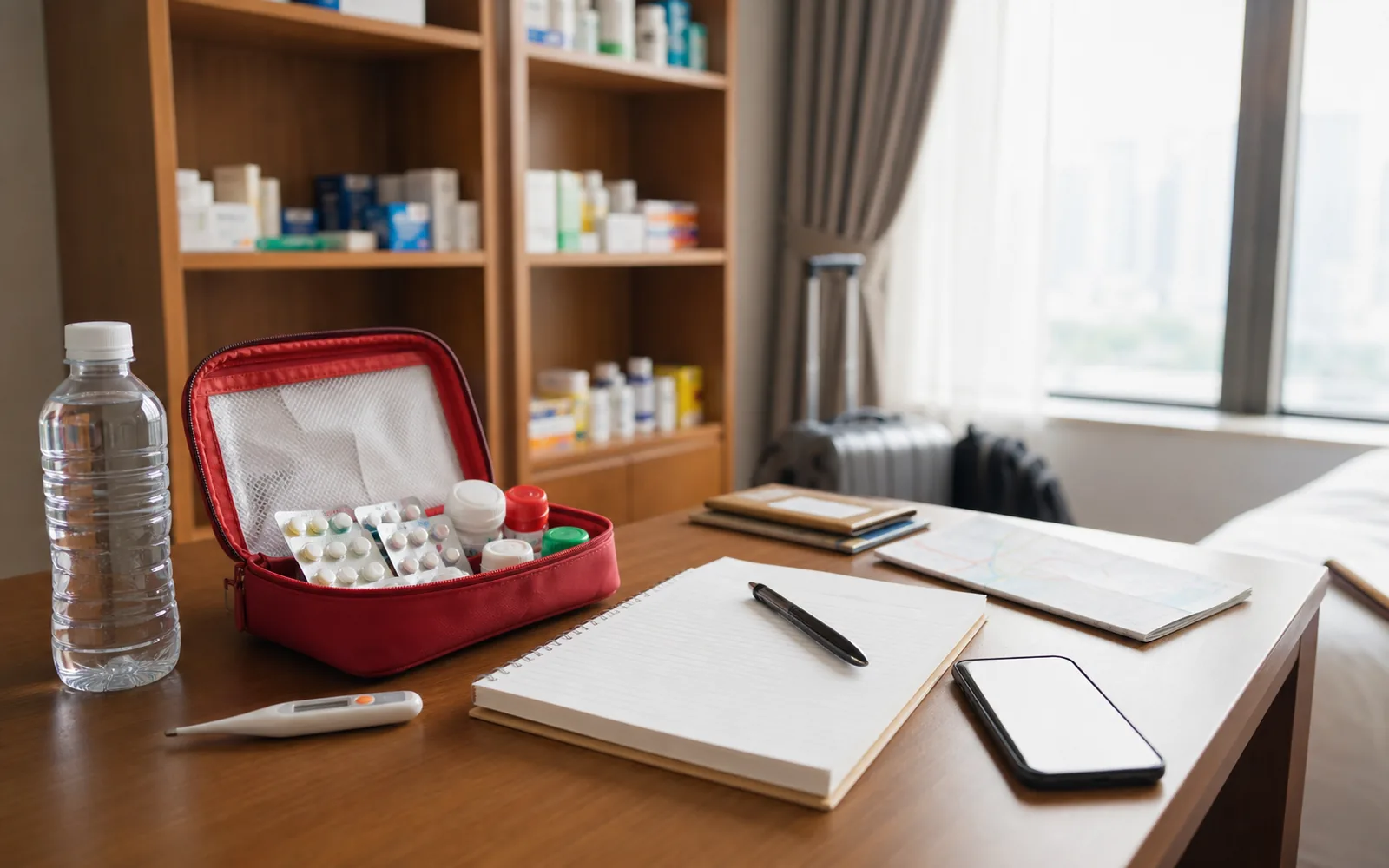
Medical readiness answer
Prepare before you are sick: insurance, medication list, allergy phrases, hospital options, and payment backups.
Choose your medical pathway
In a large city, visitors may choose between public hospitals, private clinics, international departments, pharmacies, and emergency services. The right pathway depends on severity, language needs, insurance, and location. For minor issues, a pharmacy or clinic may be enough. For emergencies, use emergency services or a hospital.
Know your likely pathway before you need it.
Medicine names need translation
Bring medication in original packaging when possible and write down active ingredients, not only brand names. Some medicines may have different local names or availability. Allergy and condition notes should be short, clear, and translated.
Medical communication should be prepared in calm conditions.
Insurance needs evidence
Claims often require receipts, medical records, diagnosis notes, police reports for lost items, and proof of payment. Ask for documents during the visit, not after leaving the city. Take photos of receipts and keep originals where possible.
The claim process begins during treatment.
Payment can be part of care
Hospitals and clinics may require payment steps that feel unfamiliar. Keep payment backups, passport, insurance card, and hotel contact accessible. If you need language help, a hotel, host, or insurer hotline may be useful.
Health planning includes logistics.
What readiness looks like before you need it
Medical readiness in China is not mainly a packing question. It is a navigation question. The visitor who does well already knows the nearest international clinic or suitable hospital, has travel insurance documents offline, can show medicine names clearly, and has a payment fallback. The visitor who struggles may have insurance but no Chinese address, a prescription but no generic name, or a hospital route but no plan for registration and payment.
For a short trip, prepare a one-page health note on your phone: allergies, regular medicines, insurance hotline, passport name, hotel address in Chinese, and emergency contact. For longer stays, add scanned prescriptions and a simple medicine inventory. Keep the note accessible without mobile data. In a stressful moment, being able to show precise information is better than trying to explain symptoms from memory.
When to use a clinic, pharmacy or hospital
For minor issues such as basic cold medicine, stomach discomfort or bandages, a pharmacy near the hotel may be enough, but use translation carefully and avoid guessing with unfamiliar medicine. For persistent fever, injury, severe pain, allergic reaction or anything involving documents for insurance, choose a hospital or international clinic route. In major cities, international departments are easier for language and paperwork, but they can be more expensive. In smaller cities, the practical plan is to bring clear written symptoms and call the insurer before non-emergency treatment when possible.
Save related pages before travel day: health insurance and medicine, living health, insurance claims, and emergency planning. The value is not reading them during a crisis; it is using them to build a calmer plan before the crisis arrives.
A realistic visitor scenario
Imagine you wake up in Chengdu with stomach pain before a train day. The wrong plan is to search randomly, translate symptoms while panicking, and hope the first pharmacy understands your medicine history. The better plan is already saved: hotel address in Chinese, nearest clinic option, insurer phone, allergies, regular medicines and a payment backup.
If the issue is mild, you can visit a pharmacy with a clear translation note. If symptoms are serious or persistent, you can choose a hospital route and keep receipts for insurance. The difference is not medical expertise. It is whether your basic information is ready before fatigue and discomfort take over.
Save before symptoms appear
Medical information should be ready before anyone feels unwell. Save allergies, medicines, insurance hotline, passport name, hotel address and emergency contact in one offline note. Add a photo of important prescription labels. If traveling with family, make one note per person. The value appears when a tired traveler can show facts quickly instead of trying to translate medical history under pressure.
Medical readiness is an information problem
Many medical problems abroad become harder because the information is scattered. Keep medication names, allergies, diagnoses, insurance contacts, passport details, hotel address, and emergency contact in one readable place. A clinic or hospital desk does not need your whole life story first; it needs the facts that affect treatment, billing, and communication.
Prepare for two levels of need. The small level is pharmacy, stomach trouble, fever, minor injury, or replacing a basic item. The serious level is hospital visit, insurance claim, embassy awareness, or travel change. Each level needs different proof and a different helper. If you sort that before travel, a stressful health moment becomes a sequence of calls and documents rather than improvisation.
Health backup list
- Carry medication list and active ingredients.
- Save allergy and condition phrases.
- Know nearby hospital or clinic options.
- Keep insurance and payment documents ready.
- Save receipts and medical records.