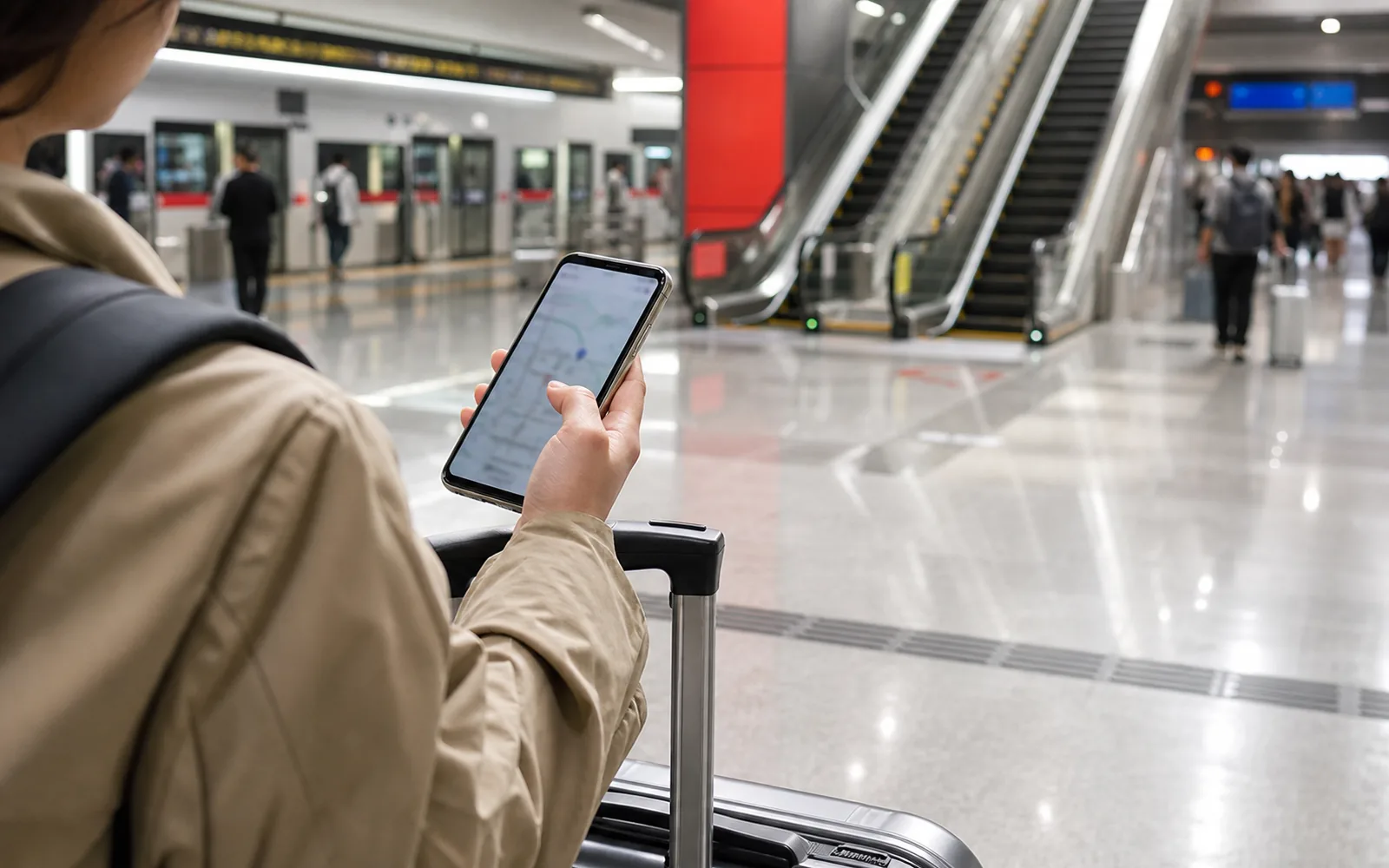
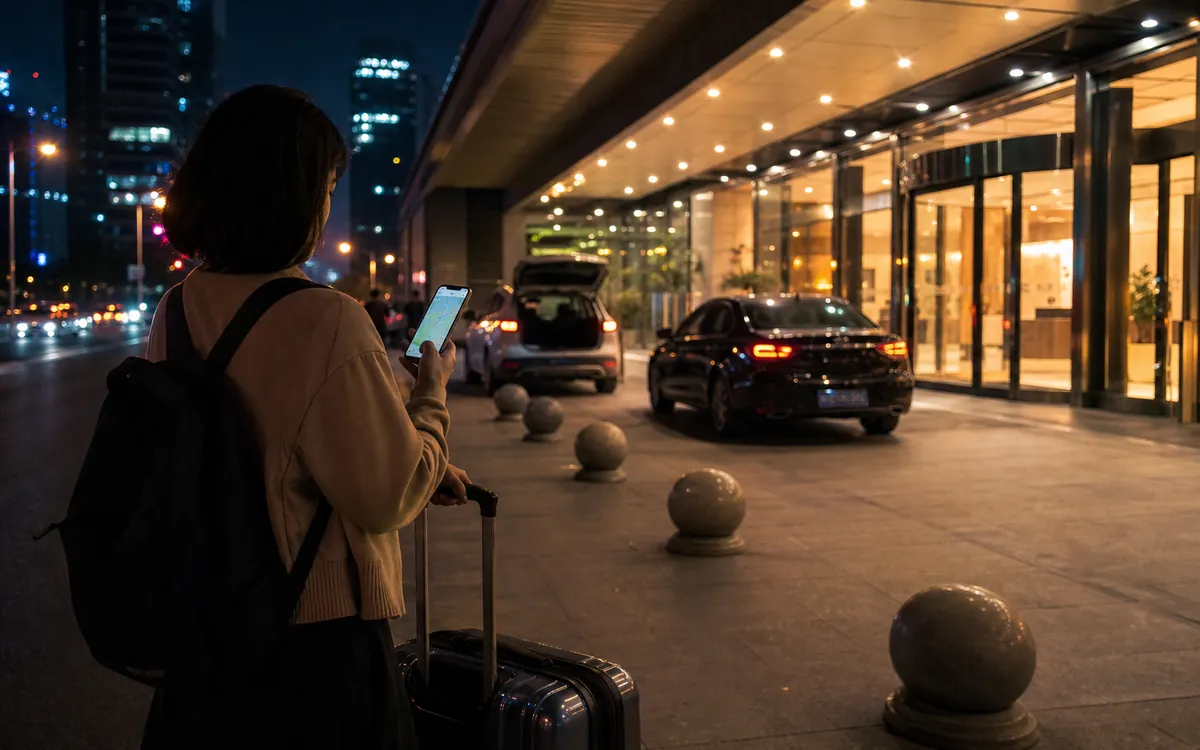

For most visitors: use official taxis or airport rail on arrival, metro inside big cities, high-speed rail for nearby city pairs, flights for very long routes, and generous buffers whenever passports, luggage, or unfamiliar stations are involved.
Mobility plan
Plan movement around stations, exits and fallback modes.
China transport is efficient, but visitors lose time when station names, airport terminals, metro exits, pickup points and luggage buffers are treated as details.
Long distance
Confirm the exact station, train type, passport ticket process and arrival-side transfer before booking tight plans.
City movement
Use metro when exits are clear, taxis when luggage or weather matters, and ride-hailing when pickup points are easy.
Buffer logic
Build time for security, walking distance, elevators, wrong exits, payment testing and language support.
Check airport, station and hotel district names in Chinese and compare real travel time, not only map distance.
Save the destination, backup route, payment method and hotel return address offline.
Transport planning: what changes the decision
City movement
- Metro first for predictable inner-city routes.
- Ride-hailing or taxi for luggage, late nights and awkward transfers.
- Keep Chinese addresses and hotel phone details offline.
Intercity movement
- High-speed rail often beats flying for nearby city pairs.
- Check exact station names before booking.
- Compare total door-to-door time, not only the ticket time.
Transport decision guide
Choose the transport mode by city distance, luggage, time pressure and payment confidence.
Safer movement
- Save station names in Chinese.
- Leave time for security and transfers.
- Keep a taxi or metro fallback.
Risky movement
- Assume English names match every sign.
- Book tight transfers with luggage.
- Rely on one app without payment backup.
 Before leaving
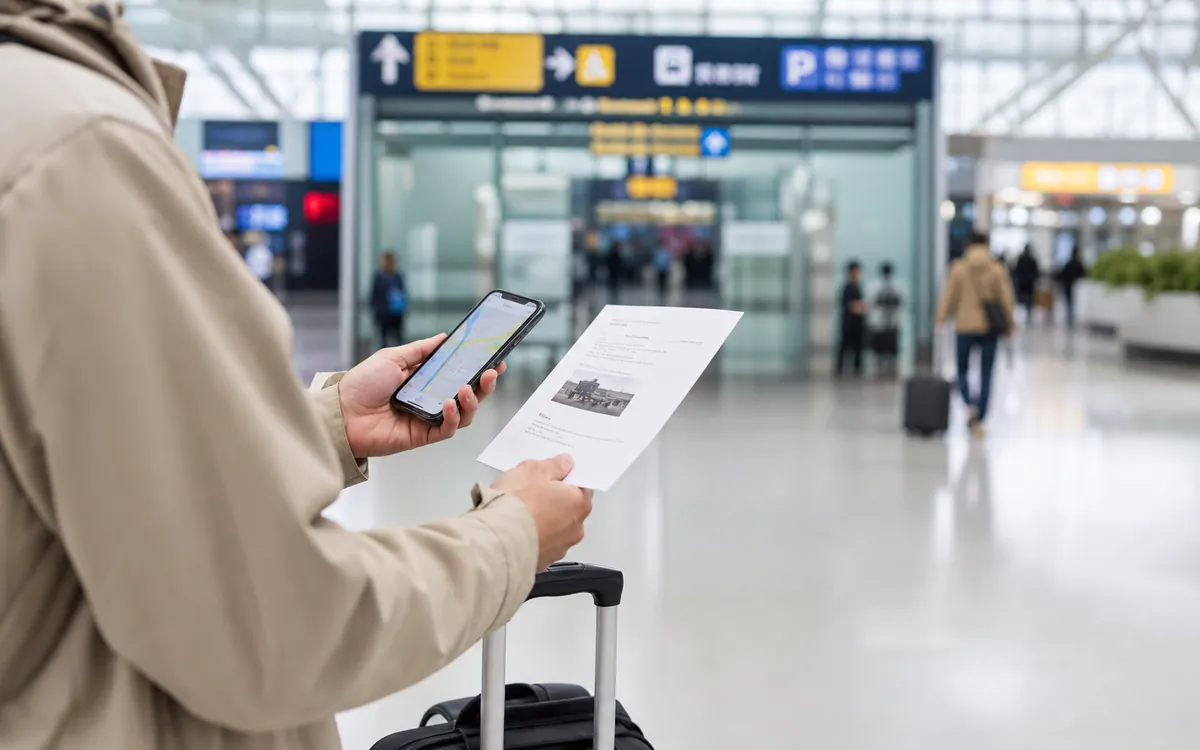
Prepare the proof, address or app screen first.
Before leaving
Prepare the proof, address or app screen first.
The useful preparation is specific: one Chinese address, one saved record, one backup route and one person who can help if routes, transfer buffers and station details stall.
 At the counter
Compare the answer you receive with the Getting around China checklist.
At the counter
Compare the answer you receive with the Getting around China checklist.
If the local process differs, follow the official instruction and keep a record of the name, time and location.
Rail and city transfers
High-speed rail, station names, security checks and realistic transfer buffers.
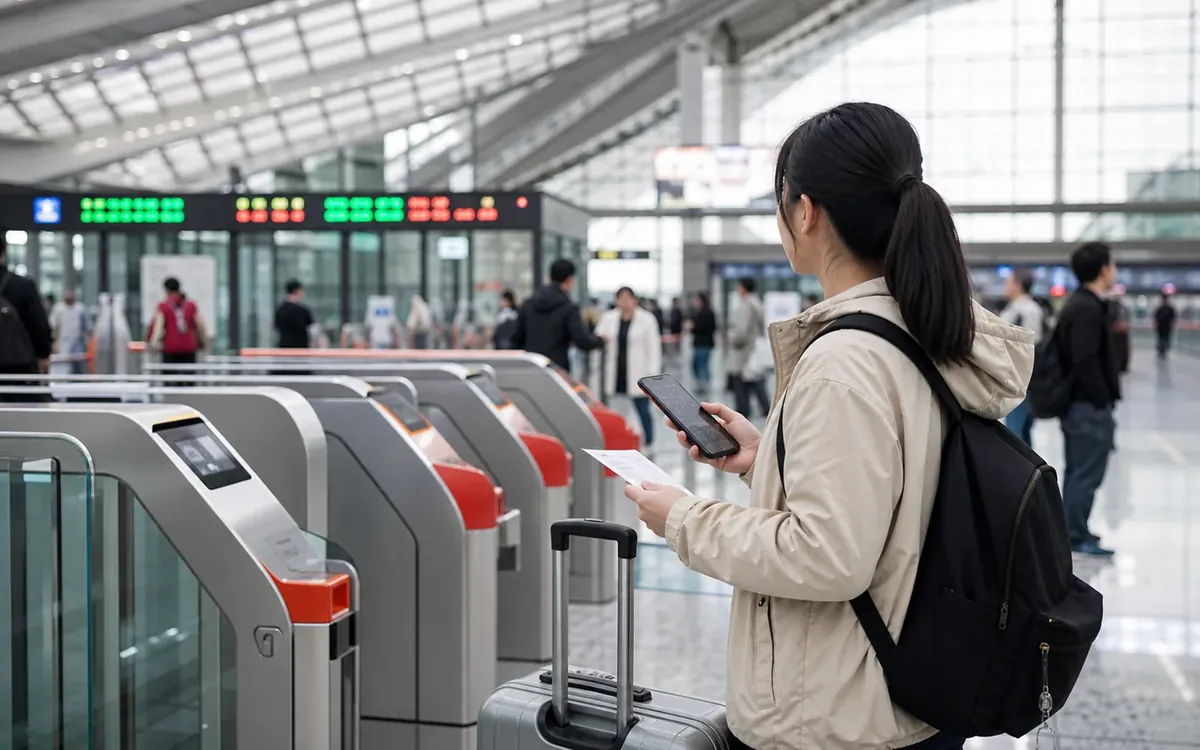
 Payments
Stations, exits and backup routes
Payments
Stations, exits and backup routes
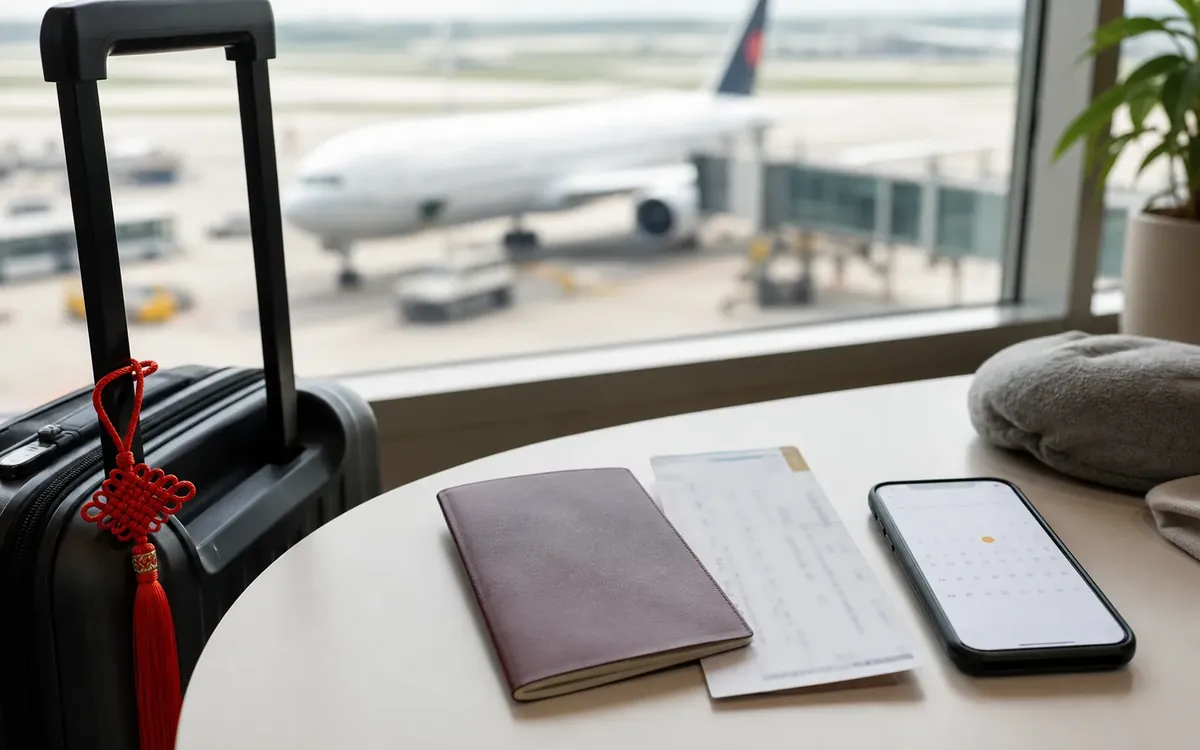 Entry
Entry rules before booking
Entry
Entry rules before booking
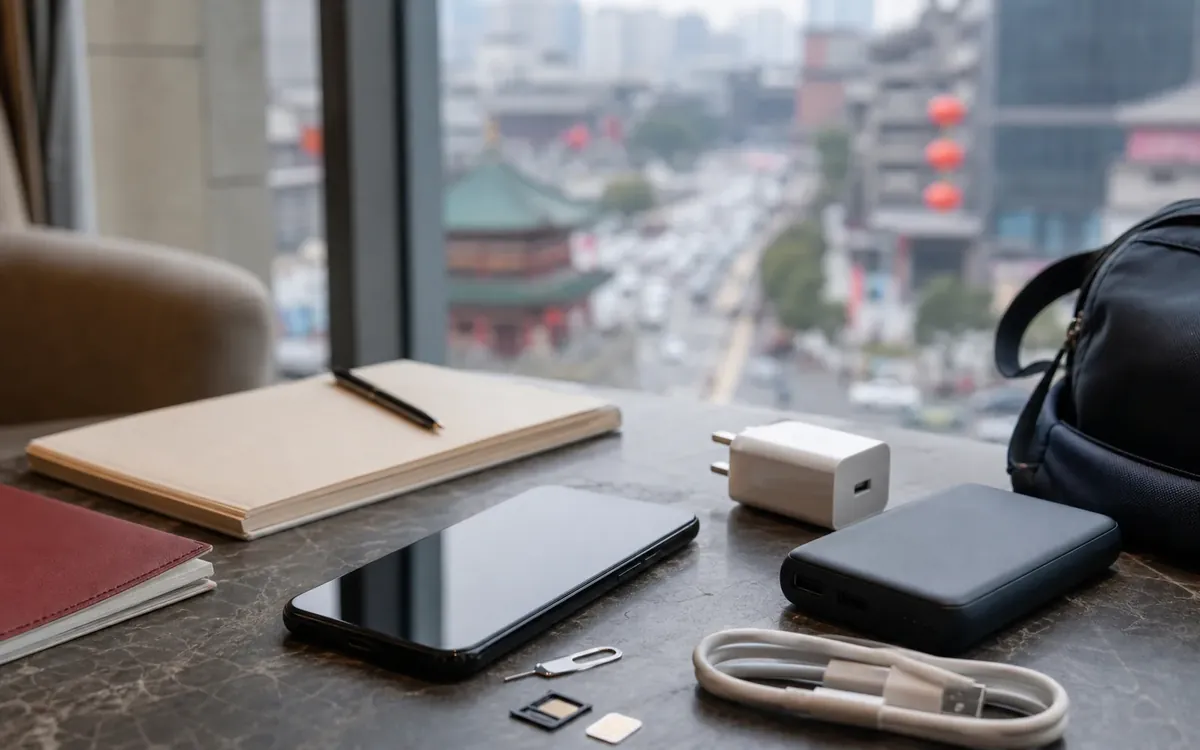 Apps
Phone, maps and translation
Apps
Phone, maps and translation
How to use Getting around China
Transport guidance focuses on real friction points: station names, passport ticketing, security checks, metro exits, luggage, rush hour, and backup routes.
Choose by distance and friction
China transport is efficient, but only when you choose the right mode for the job. A route that is fast on paper can become stressful if the station is far away, the airport is outside the city, you have heavy luggage, or your payment app is not working.
Inside a city
Metro first, then ride-hailing or taxi for luggage, late nights, bad weather, or difficult last-mile routes.
Nearby cities
High-speed rail is usually better than flying for city pairs like Shanghai-Suzhou or Guangzhou-Shenzhen.
Long distances
Compare total door-to-door time, not only train time or flight time.
Airport to city
Large Chinese airports usually have metro, airport rail, taxis, and ride-hailing pickup zones. If you are tired, carrying luggage, arriving late, or visiting for the first time, a licensed taxi from the official queue is often the simplest choice.
- Get mobile data working before leaving arrivals.
- Save the hotel address and phone number in Chinese.
- Use official taxi queues, airport rail, metro, or clearly marked ride-hailing pickup zones.
- Ignore unofficial drivers who approach you inside terminals.
- Keep a backup payment method ready before the ride starts.
High-speed rail
High-speed rail is often the best way to move between major Chinese cities. It can beat flying on total convenience because stations may be closer to city centers, security is usually simpler than airports, and delays from weather may be less disruptive on many routes.
The official China Railway English website is 12306 China Railway. Use official 12306 or trusted booking channels to verify live schedules, ticket availability, prices, document rules, refunds, and changes.
Passport name
Book with the exact name and document you will use at the station.
Station name
Large cities often have several rail stations far apart. Check every ticket carefully.
Buffer
First-time rail travelers should arrive early enough for security, ID checks, and platform navigation.
Station mistakes to avoid
Do not treat station names as interchangeable. Beijing South, Beijing West, Shanghai Hongqiao, Shanghai Railway Station, Guangzhou South, Shenzhen North, Futian, Chengdu East, Chongqing North, and Chongqing West can mean very different transfer times.
- Check the Chinese station name as well as the English name.
- Look at the station's distance from your hotel, not only the city name.
- Do not book tight hotel-to-station transfers in a city you do not know.
- For same-day air-rail transfers, compare airport and rail station locations carefully.
Metro and city transit
Metro systems in major Chinese cities are usually clean, frequent, inexpensive, and easier than traffic. Many cities support QR payment or transit cards through apps, but ticket machines and service counters are useful backups.
Metro is best when you have light luggage, know your destination station, and are not rushing to a major departure. With heavy bags, late-night arrivals, rain, or a hotel far from the station exit, taxi or ride-hailing may be worth it.
Taxi and ride-hailing
Taxis and ride-hailing are best for door-to-door convenience, late arrivals, bad weather, business parks, hospitals, hotels far from metro, and cities with difficult terrain. Ride-hailing can reduce language friction if the pickup and destination are already in the app.
- Use official taxi queues at airports and train stations.
- Keep your destination in Chinese characters.
- Check the car plate before entering a ride-hailing car.
- Use your hotel front desk when a driver needs directions.
- Keep cash or another payment method if mobile payment fails.
Domestic flights
Domestic flights make sense for long cross-country jumps, routes where rail is too slow, or when airports are better positioned for your actual plan. But compare total time: city-to-airport transfer, check-in, security, delays, baggage, and airport-to-city transfer can erase the headline speed.
For shorter corridors, high-speed rail is often less stressful. For routes such as eastern China to far western China, northeast winter trips, or long north-south journeys, flying may be practical.
Luggage and accessibility
Luggage changes the transport decision. Metro stairs, long station corridors, security lines, crowded escalators, and large station exits can turn a cheap route into a tiring one. If you have heavy luggage, children, mobility limits, or a late arrival, choose simpler transfers.
- Pack so you can manage stairs and station transfers yourself.
- Leave extra time for elevators in large stations.
- Keep passport, ticket, phone, and payment method easy to reach.
- Do not schedule a complex transfer after a long-haul flight.
Practical buffer rules
Buffers are not wasted time in China. They are what keep a good system from becoming stressful when language, payment, luggage, weather, security, or station scale enters the picture.
Airport arrival
Keep the first transfer simple. Do not stack sightseeing before hotel check-in after a long flight.
Rail departure
For a first high-speed rail trip, arrive earlier than a local traveler would.
Same-day transfers
Add extra time when switching between airport, rail station, hotel, and a different district.
Common route logic
Rail is usually strong for Beijing-Shanghai, Shanghai-Hangzhou, Shanghai-Suzhou, Shanghai-Nanjing, Guangzhou-Shenzhen, Chengdu-Chongqing, Beijing-Xi'an, and many Yangtze River Delta or Greater Bay Area routes. Flights become more attractive as the rail time grows, especially above a comfortable half-day.
Use the High-speed rail planner for station reminders and rough route logic, then check live schedules on 12306.
Mistakes to avoid with Getting around China
- Booking the wrong rail station because the city name looked right.
- Comparing flight time to train time without adding airport transfers.
- Trying to use metro with heavy luggage after a long flight.
- Entering a random car from someone who approaches inside an airport or station.
- Forgetting that passport-name consistency matters for rail tickets.
- Scheduling a tight meeting, train, or flight on the first arrival day.