



Your university's international student office is your first source of truth. Use it to confirm visa type, arrival date, campus registration, residence permit timing, insurance, dormitory or off-campus housing, internship permission, and renewal deadlines.
Long-stay plan
Set up student life before classes become busy.
Study success depends on more than the classroom. Registration, housing, campus systems, phone access, payments and health routines should be stable before deadlines and exams arrive.
Registration stack
Keep admission letters, passport, visa or residence documents, campus contacts and address details in one reliable folder.
Campus routine
Confirm student ID, dorm or apartment access, canteen payment, Wi-Fi, library systems and school communication channels early.
Daily support
Know who helps with health, housing, class changes, police registration, banking questions and emergency contact updates.
Test campus payment, phone data, maps, translation, health contacts and the route from housing to class.
Check passport, residence documents, ticket names, school notices and return-date requirements.
Longer-stay decision guide
Longer stays are less about sightseeing and more about repeatable systems: housing, phone, payment, work or study.

Safer setup
- Build housing, money and phone systems early.
- Keep document copies organized.
- Ask what is local custom versus formal requirement.
Risky setup
- Solve each system only after it blocks you.
- Keep documents scattered across apps.
- Ignore registration, deposits or local platform rules.

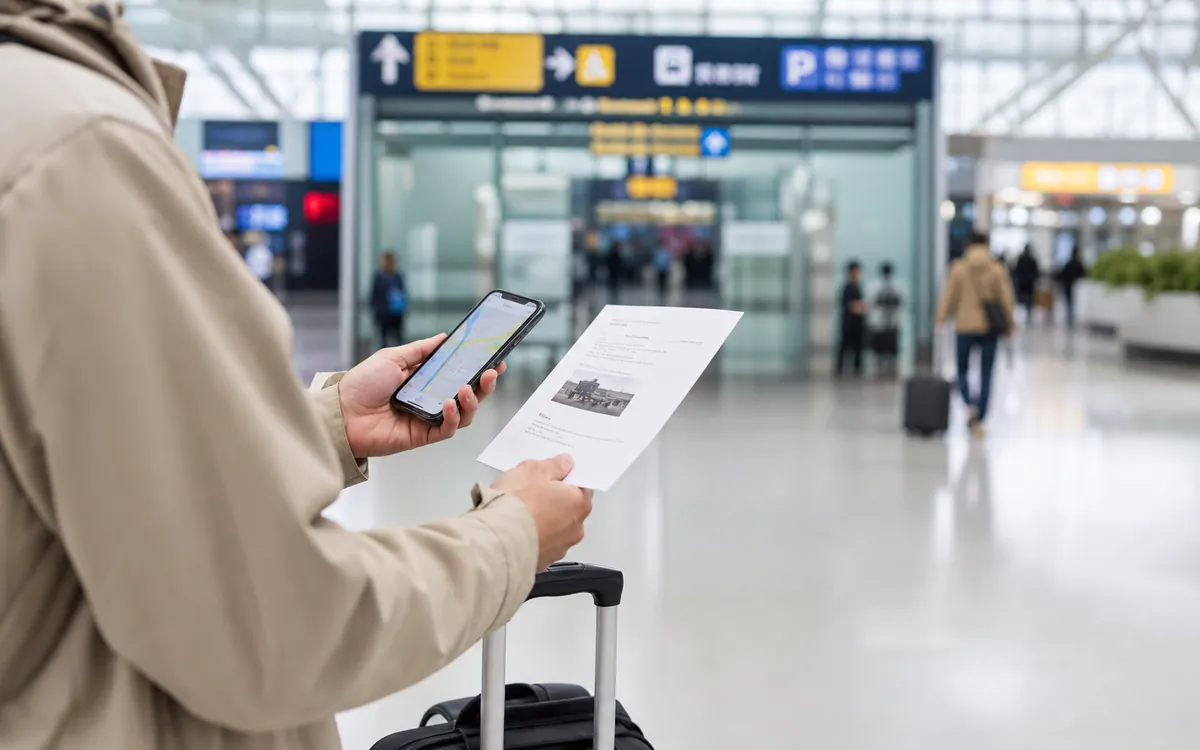 Prepare
Set up the part that is hard to fix under pressure.
Prepare
Set up the part that is hard to fix under pressure.
Do this before a station queue, front desk, restaurant rush, supplier visit or late-night transfer narrows your choices.
Recover
Keep a calm fallback that a local person can understand.
The best backup is simple enough to show: an address, receipt, passport page, route, contact or translated sentence.
Routine, timing and local support
Check the one setup step that unlocks the day, the local phrase or address, and who can help if the routine fails.

 Entry
Entry rules before booking
Entry
Entry rules before booking
 Transport
Rail and city transfers
Transport
Rail and city transfers
 Apps
Phone, maps and translation
Apps
Phone, maps and translation
Important: Student immigration and campus rules can vary by city, university, program, visa type, and date. This page is practical orientation, not legal advice. Confirm your own case with your university and official authorities.
Before arrival
Student setup is a sequence. Admission documents, visa path, arrival date, health or insurance requirements, campus registration, accommodation, phone data, payment, and residence permit timing can depend on each other.
- Admission notice, university contact, program start date, campus address, and registration date.
- Visa documents such as admission materials and any foreign student visa application form required for your case.
- Passport validity, photos, emergency contact, insurance information, and medical or vaccination records if required.
- Dormitory booking, off-campus housing plan, or temporary hotel plan.
- Payment plan for tuition, dormitory, deposit, food, transport, phone, and first-month living costs.
- Offline copies of all important documents in secure storage.
X visa and student residence permit
Longer programs often involve an X1 visa and a student-type residence permit after entry. Official Beijing education rules state that if an X visa indicates a residence permit is required after entry, the student should apply for a foreigner's residence permit for study within 30 days from the day of entry, with admission and study-term materials and other required documents.
NIA guidance says student-type residence permits are issued according to the term of study indicated by the school or university, and applications are handled by exit-entry departments of public security organs.
- Do not ignore the 30-day timeline if your visa requires a residence permit after entry.
- Ask your university whether it organizes residence permit appointments or document checks.
- Ask whether your passport will be held during processing before booking travel.
- Keep application receipts, acceptance slips, and scans of updated permits.
First week on campus
Do not spend the first week only exploring. Finish the administrative basics early, while university staff are expecting new students.
- Complete university registration and confirm your student status in the university system.
- Set up dormitory or housing check-in and accommodation registration.
- Confirm health check, medical record verification, insurance, and residence permit steps.
- Set up phone data, student ID, campus card, payment method, email, Wi-Fi, and learning platforms.
- Learn where to go for international student office, clinic, police station or exit-entry support, bank, canteen, package pickup, and emergency help.
Dormitory and housing
Housing is paperwork, not just a bed. Dormitories may simplify registration and campus access, while off-campus housing can offer more independence but requires more attention to lease, registration, commute, package delivery, and daily systems.
Dormitory
Usually easier for campus life, student registration, package pickup, and school support. Check rules for guests, curfew, kitchen, laundry, and holidays.
Off-campus rental
More independence, but verify accommodation registration, lease terms, deposit, commute, utilities, and delivery access.
Temporary hotel
Useful on arrival if dorm move-in is later or your apartment is not ready. Confirm passport check-in and distance to campus.
Health, insurance, and medical prep
Universities may have specific insurance, health check, or medical record requirements. Ask before departure what must be completed at home and what must be done after arrival in China.
- Insurance policy, claim phone number, and direct-billing rules if any.
- Allergy, medication, vaccination, and chronic condition notes.
- Campus clinic location and nearest large hospital.
- Emergency contact and Chinese campus or dormitory address.
- Receipts, diagnosis notes, and prescriptions for any claim or university requirement.
Banking, phone, and payment
Students often need the same practical stack as residents: phone data, payment apps, campus card, bank account if required, and reliable identity verification. Some university fees or scholarships may require a specific banking path.
- Ask whether the university requires a Chinese bank account for scholarship, refund, stipend, or campus services.
- Keep your home SIM active until bank, email, and university verification are stable.
- Prepare Alipay or WeChat Pay, plus a backup card or cash plan.
- Save campus address, dormitory address, and international student office address in Chinese.
Campus systems
Campus life often has its own operating system: student ID, campus card, canteen payment, library login, learning platform, dorm gate, package pickup, printer, sports booking, course selection, and academic notices.
Academic
Course selection, timetable, learning platform, academic adviser, grading, attendance, exams, and thesis deadlines.
Daily
Canteen, laundry, campus card, dorm access, package pickup, bike parking, and student services.
Support
International student office, department office, clinic, counselor, emergency contact, and visa/residence permit office.
Internships and part-time work
Do not assume a student residence permit automatically allows off-campus work or internships. NIA guidance says foreign students holding student-type residence permits who intend to work part-time or take an internship outside the school should, with school approval, apply to exit-entry authorities to add remarks to the residence permit indicating the location and duration of the part-time job or internship. Without the required remarks, they are not allowed to work or take internships outside the school.
- Ask your university before accepting any internship, part-time work, paid project, or off-campus arrangement.
- Get written school approval and employer or internship documents if required.
- Apply for the correct residence permit remark or endorsement before starting.
- Make sure internship dates do not exceed the residence permit validity.
- Use formal school platforms or approved channels where possible.
Renewals and changes
Student status is connected to your program, passport, residence permit, address, insurance, and university record. If any of these change, ask the international student office what must be updated.
- Track passport, visa, residence permit, student status, insurance, dorm contract, scholarship, and tuition deadlines.
- Start residence permit renewal questions 60 to 90 days before expiry.
- Ask whether travel plans conflict with residence permit processing.
- Update accommodation registration if you move, according to local requirements.
- Ask what to do if you change program, suspend study, transfer school, graduate early, or extend study.
Graduation or leaving China
Leaving campus also has paperwork. Before graduation or withdrawal, collect records while your student accounts and office contacts still work.
- Degree certificate, transcript, attendance or enrollment records, scholarship records, and recommendation letters if needed.
- Residence permit, visa, or stay permit instructions after graduation.
- Dorm checkout, apartment move-out, deposit refund, utility settlement, and package forwarding.
- Bank, phone, insurance, tax or stipend records, and app access after departure.
Mistakes to avoid with Studying in China
- Arriving late and missing residence permit or campus registration timing.
- Assuming the university will automatically handle every immigration step.
- Moving off campus without checking accommodation registration.
- Accepting an internship or part-time job before getting school approval and residence permit remarks.
- Ignoring insurance and health check instructions until a deadline appears.
- Leaving China without transcripts, certificates, bank access, or dorm refund records.
Official and useful sources
- Ministry of Education of the People's Republic of China
- National Immigration Administration: Student-type residence permit and internship remarks
- Beijing Municipal Government: Applying for a Student Residence Permit in China
- Beijing / Campus China: Off-campus internship and part-time work note
- Beijing Municipal Government: International student enrollment and cultivation rules
- Beijing Municipal Government: Residence permit endorsement for internship, work-study, entrepreneurship